If straw tying up nitrogen is slowing crop growth on your farm, you are not imagining it. After harvest, high-carbon cereal residues can temporarily lock up available soil nitrogen while microbes break the straw down. As a result, young crops may look pale, slow, or uneven, especially where residue loads are heavy or seedbed conditions are poor. However, this problem is often mixed up with compaction, shallow rooting, hair-pinning, or slug damage, so good diagnosis matters before changing the fertiliser plan.
Quick Answer
Straw tying up nitrogen happens when soil microbes use available nitrogen to break down high-carbon crop residues such as cereal straw. As a result, less nitrogen is temporarily available to the young crop. The risk is usually higher where straw loads are heavy, breakdown is slow, and seed-to-soil contact is poor. Therefore, check residue levels, rooting, emergence, and seed placement before assuming the crop simply needs more nitrogen.
Straw tying up nitrogen is one of the hidden ways farm costs rise before the crop is fully established. For the wider picture on nutrient waste, residue pressure, patchy establishment, and diesel-heavy rework, see our guide on REDUCE FARM INPUT COSTS.
Key Facts
Main issue: High-carbon straw can temporarily reduce nitrogen availability to the crop.
Most common cause: Microbes need extra nitrogen to break down cereal residues.
Where risk is highest: Heavy straw loads, cereal-after-cereal systems, poor chop and spread, cool soils, and direct-drilled fields with residue problems.
What it can look like: Pale crop, slower early growth, uneven establishment, patchy vigour, or weak rooting.
Often confused with: Compaction, hair-pinning, shallow roots, slug damage, and uneven seed depth.
What to check first: Straw distribution, seed-to-soil contact, root development, emergence counts, and residue pressure across the field.
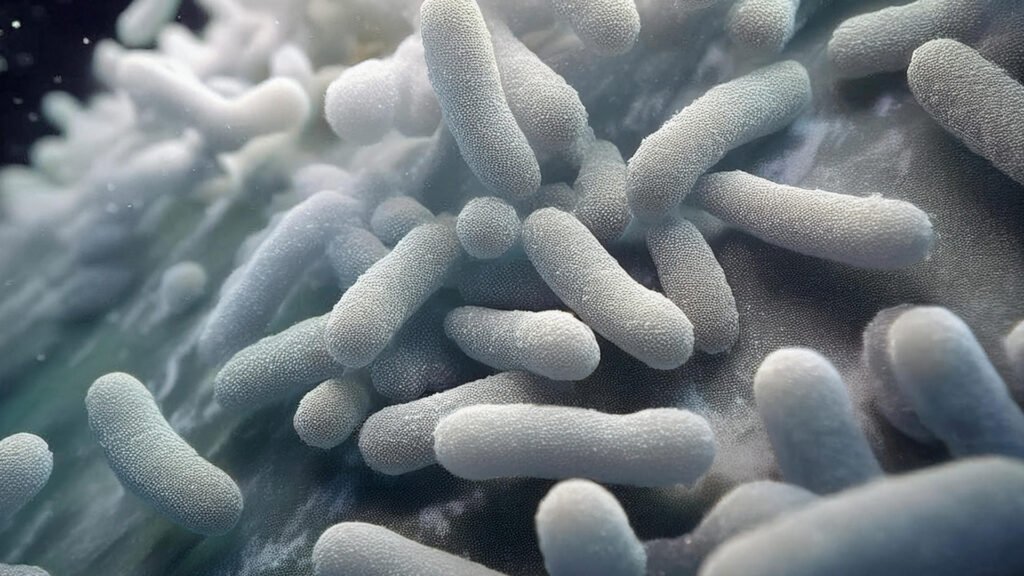
Where biology fits: Microbial support can help residue breakdown and improve early rooting and nutrient cycling.
Diagnosis Table
Before changing the nitrogen plan, dig a few plants and compare good and poor areas side by side. In many fields, straw tying up nitrogen is only part of the problem.
| What you see | Likely cause | What to check |
|---|
| Pale crop soon after emergence | Temporary nitrogen immobilisation from straw breakdown | Compare residue-heavy areas with cleaner zones |
| Uneven crop colour across the field | Uneven straw spread behind the combine | Check straw distribution across the full bout |
| Patchy emergence in high-trash areas | Hair-pinning or poor seed-to-soil contact | Dig seed rows and check slot closure |
| Small plants with weak early vigour | Nitrogen tied up plus slow rooting | Check root depth, root branching, and seedbed condition |
| Worse crop on wheelings or tighter ground | Compaction making nutrient access worse | Dig for smearing, pans, and restricted roots |
| Missing or chewed seedlings under residue | Slug pressure, not mainly nitrogen tie-up | Use traps and inspect under straw cover |
| Crop responds slowly even after early nitrogen | Nitrogen still tied up in residue zone or roots not exploring | Check whether roots are reaching moisture and nutrition |
| Stronger crop where straw is lighter | Residue load driving local nitrogen competition | Compare straw thickness and surface cover across zones |
| Slow crop after direct drilling into chopped straw | Residue concentration, cooler surface soil, or poor contact | Check drill line cleanliness and seed placement |
| Crop looks hungry but tissue tests are mixed | Multiple causes, not just nitrogen shortage | Compare rooting, residue, pests, and moisture before reacting |
Where straw tying up nitrogen comes from
Straw tying up nitrogen starts with the carbon-to-nitrogen balance in crop residues. Cereal straw contains a lot of carbon, but not much readily available nitrogen. Therefore, when microbes begin breaking that material down, they pull nitrogen from the soil around them to do the job. This process is called nitrogen immobilisation.
As a result, some of the available nitrogen is temporarily tied up in microbial activity instead of being freely available to the young crop. Consequently, crops can look pale, slow, or uneven, especially in the early stages. However, this is usually a temporary problem rather than a permanent nitrogen loss.
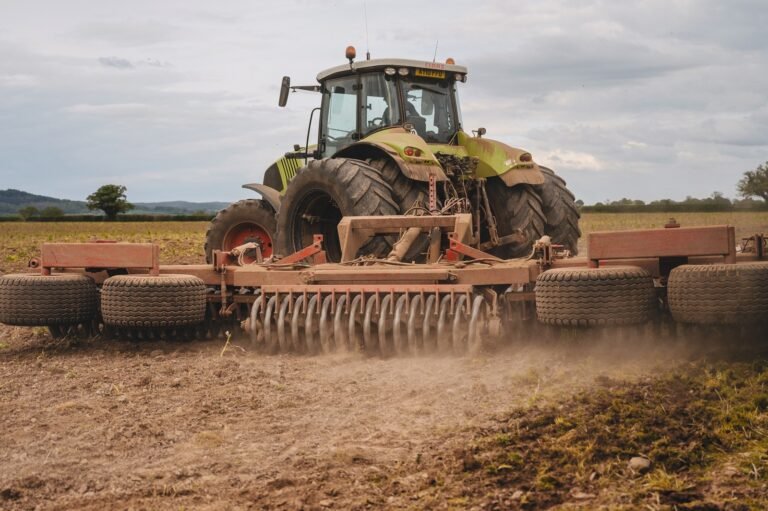
In most fields, the risk is higher where straw loads are heavy, chopped residue is unevenly spread, or the field has gone back into cereals again. In addition, the problem can become worse in cool soils, slow breakdown conditions, or where poor seed-to-soil contact is already putting establishment under pressure. Likewise, in direct-drilled or minimum-till systems, thick surface residues can create cooler, wetter zones that delay early growth and make the nitrogen issue look worse.
For that reason, straw tying up nitrogen should never be viewed in isolation. In many fields, it sits alongside other establishment problems such as compaction, hair-pinning, shallow roots, slug pressure, or variable sowing depth. Therefore, the best approach is to diagnose the whole field situation before reaching for extra nitrogen.
The fix: what to do in practice
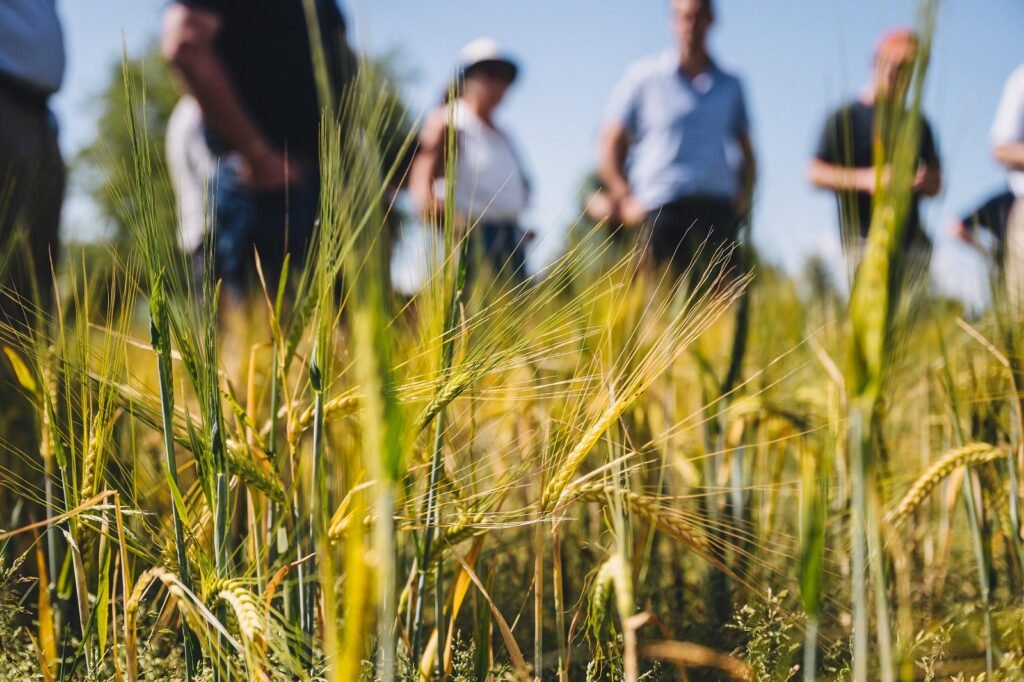
The best fix for straw tying up nitrogen starts before the next crop is even drilled. First, focus on residue management at harvest. Even chop and spread matter because thick patches of straw create localised nitrogen competition and, as a result, lead to uneven crop growth. In other words, if straw is badly distributed, the crop often tells the story later.
Next, protect seed-to-soil contact. Where straw is pushed into the slot or left concentrated in the drill line, emergence can slow down and the crop may struggle before nitrogen even becomes the main issue. Therefore, it helps to dig behind the drill, check slot closure, and make sure seed placement stays consistent across the field.
Then watch early rooting closely. A crop with strong roots can usually cope better with short-term nitrogen immobilisation than a crop stuck in a poor seedbed. So, check root depth, branching, and soil condition in both the good and poor patches. If roots are shallow or restricted, fixing the soil problem matters just as much as the nutrient plan.
In addition, biology can support the system. Where straw breakdown is slow, the right biological approach can help speed residue cycling and improve early nutrient turnover. In practical terms, that means supporting the breakdown process rather than leaving the crop to compete with a heavy trash load on its own.
Finally, do not rush to treat every pale crop as a straight fertiliser shortage. Extra nitrogen may sometimes help, but it should come after checking residue load, rooting, seed placement, and pest pressure. Otherwise, you risk masking the real issue instead of solving it.
Measure it: turn field observations into proof
If you think straw tying up nitrogen is holding the crop back, the next step is to measure the field rather than rely on appearance alone. Although pale growth can point to temporary nitrogen immobilisation, it can also overlap with compaction, shallow rooting, poor seed placement, or slug pressure. Therefore, a few simple checks will give you a far clearer picture.
Check emergence across the field
Start with emergence counts in different parts of the field. For example, compare cleaner areas with zones carrying heavier residue. If the crop is weaker mainly where straw sits thickest, that is a useful clue. However, if the problem follows wheelings, headlands, or tighter ground, then soil structure may be the bigger issue.
Dig roots in good and poor patches
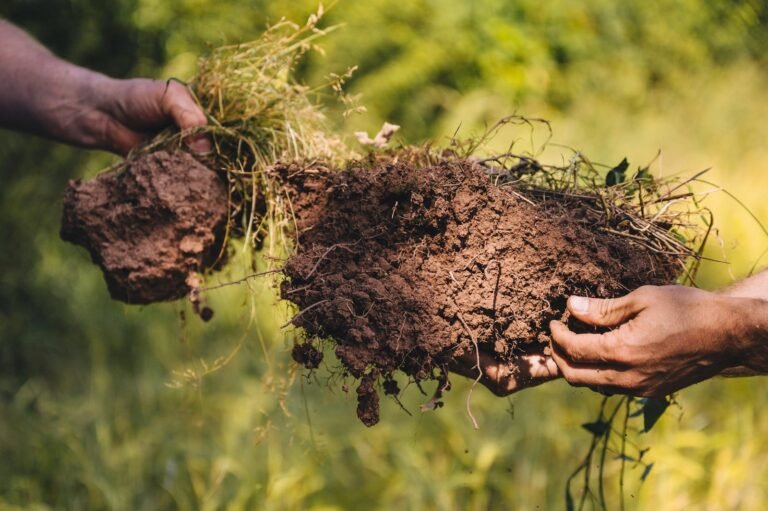
Next, dig plants from both the good and poor areas. Then compare root depth, root branching, and how easily the roots move through the soil. If roots are short, bent, or restricted, the crop may not be accessing moisture and nutrients properly. In that case, nitrogen tie-up may be only part of the story.
Look at straw distribution
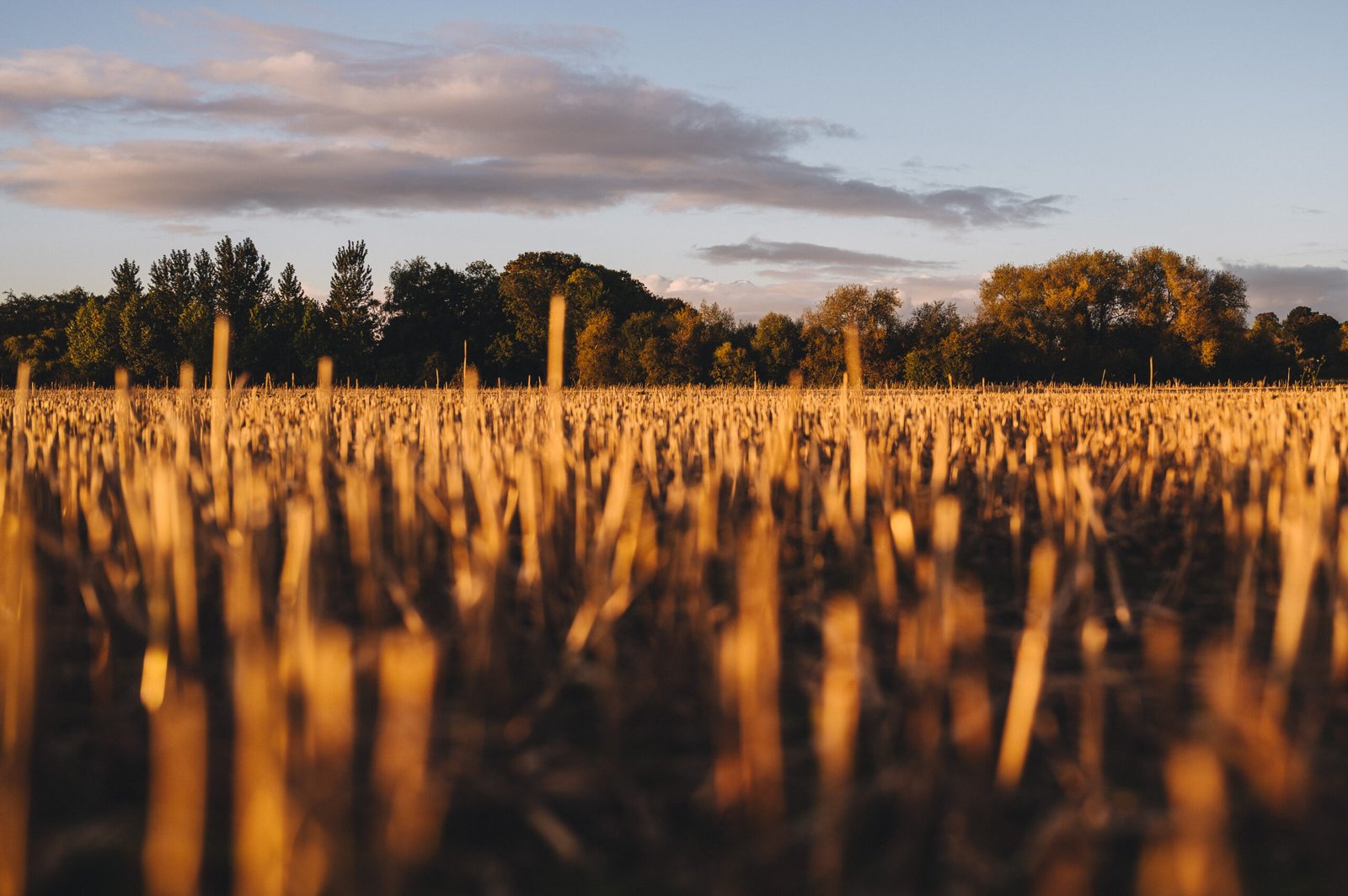
After that, check residue levels and straw distribution. Look across the full bout rather than one small area. Uneven chop and spread often create localised pressure and, as a result, the crop can look patchy for reasons that are not obvious from the cab.
Inspect the seed row
It also helps to inspect the seed row itself. In direct-drilled or minimum-till fields, look for hair-pinning, poor slot closure, and inconsistent seed depth. These issues can slow emergence first and therefore make the crop look hungry later.
Watch how the crop changes over time
Finally, compare crop uniformity over time rather than on one day alone. If temperatures rise, residue starts to break down, and the crop begins to even up, that supports the case for temporary nitrogen immobilisation. By contrast, if poor patches stay behind while the rest of the field moves on, another establishment problem may still be limiting performance.
What to measure in the field
| What to measure | Why it matters |
|---|---|
| Emergence counts | Shows whether residue-heavy areas are delaying establishment |
| Root digs | Helps separate nitrogen tie-up from compaction or shallow rooting |
| Straw distribution | Reveals whether uneven residue spread is driving patchy crop growth |
| Seed depth and slot closure | Shows whether poor placement is adding to the problem |
| Slug activity | Helps rule out pest damage disguised as a nutrition issue |
| Crop colour and vigour by zone | Helps compare residue-heavy areas with cleaner parts of the field |
| Change over 7–14 days | Shows whether the crop is recovering as breakdown progresses |
If poor areas also show uneven plant numbers, it is worth checking our guide on patchy emergence in crops, which explains how moisture, depth, and contact problems can distort early growth. If roots are short or restricted, our article on shallow roots in crops helps explain why the crop may struggle to access both nitrogen and water. Likewise, if the problem follows tighter ground, our soil compaction in fields guide is a strong companion read because compaction often makes a nutrient issue look worse than it really is.
Simple programme (post-harvest → cover termination → pre-drill)
- Post-harvest: reset the straw. Apply BactoRol Plus soon after harvest to start breaking down straw while conditions are still favourable. Aim the spray at the straw surface for better contact. If possible, time the application ahead of light rain or damp conditions, because moisture helps microbes start working faster.
- Cover-crop transition: keep C:N balance moving. Apply BactoRol Plus again at, or just before, cover-crop termination where residue loads remain high. If you plan to roll or lightly incorporate residues, spray before that pass so the biology reaches more plant material. As a result, breakdown can begin earlier and residue pressure is often easier to manage before drilling.
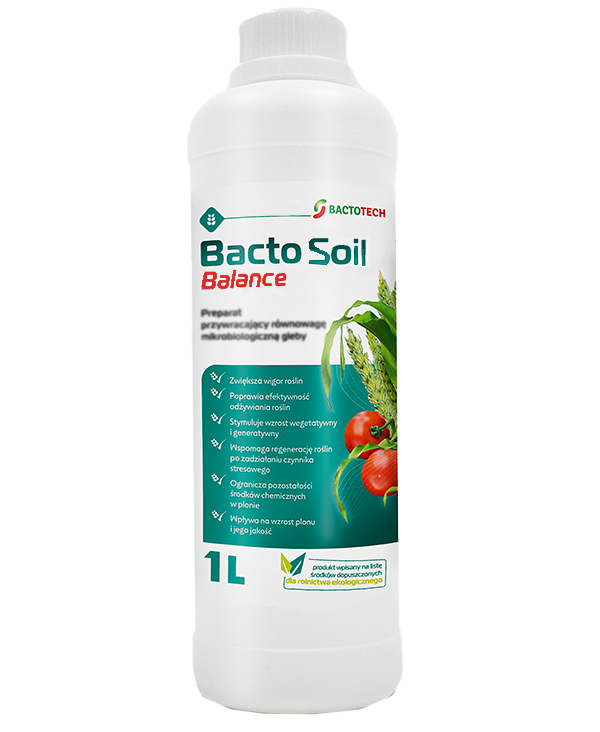
- Support the soil background. Use BactoSoil Balance one to three times per season to support soil biology, aggregation, and steadier residue turnover. In addition, try to keep bactericides and strong oxidisers away from biological applications. That helps protect microbial activity when you want it most.
Good habits that make the programme work better
- Spread chaff and straw evenly at harvest, because uneven residue creates uneven crop pressure later.
- Keep some moisture in the system where possible, as dust-dry straw usually breaks down more slowly.
- Log dates, weather, residue levels, and straw height so you can compare results fairly from field to field and season to season.
- Always follow product labels and safety guidance.
What to expect
- Faster visual residue breakdown, especially where straw was slowing drilling or seedbed quality.
- Less slug shelter in heavy trash zones, which may reduce pressure and bait points.
- Cleaner seedbeds with fewer reworks, and therefore fewer unnecessary passes.
- Better seed-to-soil contact, which supports more even establishment.
- Less early nitrogen drag on the young crop where residue breakdown was previously competing for available N.
- As a result, drilling can stay more on time and seedbed costs are often easier to control.
Measure it: turn “feel” into proof
Track these over four to eight weeks and again at emergence:
| What to track | Why it matters |
|---|
| Residue cover (%) or straw height at fixed GPS points | Shows whether residue is clearing more quickly |
| Slug traps under tiles or rolled mats | Helps measure whether straw shelter is reducing |
| Soil nitrate quick tests or leaf colour scores | Shows whether early crop nitrogen pressure is easing |
| Emergence counts at day 7–14 | Helps confirm whether establishment is becoming more even |
| Uniformity across the bout | Shows whether residue pressure is still patchy |
| Passes per hectare and diesel per hectare | Measures whether seedbed prep is becoming simpler and cheaper |
Field tips: do’s & don’ts
Do
- Spread residue evenly at the combine.
- Use sharp, well-set openers to reduce hair-pinning.
- Aim the spray at the straw, not the gaps.
- Time biological applications near moisture for a better start.
Don’t
- Tank-mix biologicals with bactericides or harsh oxidisers.
- Expect biology to replace steel where cultivation is still needed.
- Skip measurements, because proof helps you make better decisions next season.
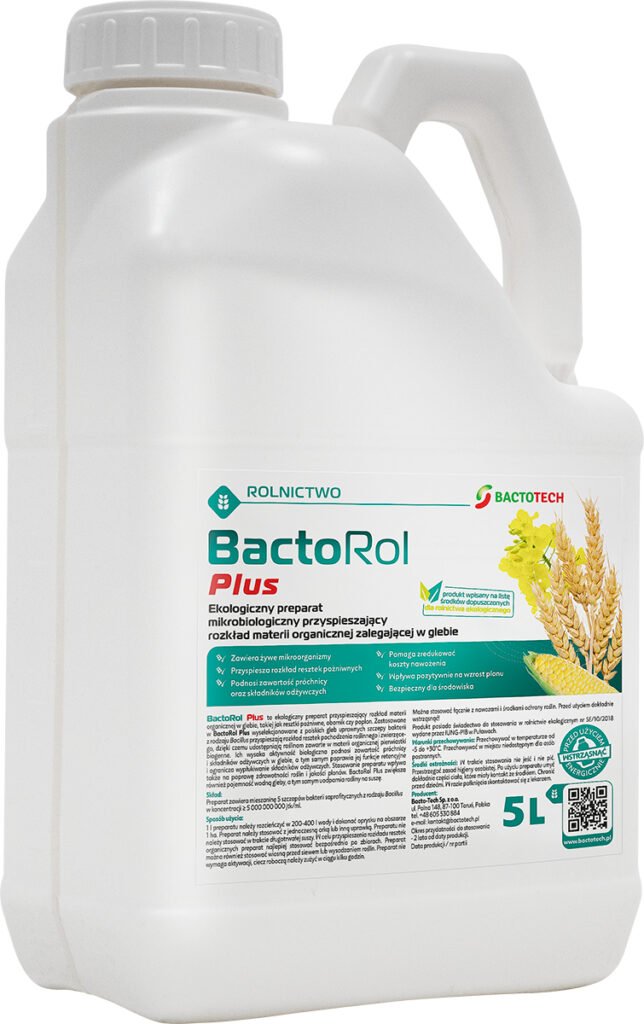
The products behind this programme
- BactoRol Plus helps accelerate residue and cover-crop breakdown with enzyme-producing Bacillus, which supports cleaner and faster seedbeds.
- BactoSoil Balance supports soil biology and aggregation, so residues cycle more steadily and seedbeds often form with fewer corrective passes.
Compatibility and safety: Natural and non-GM. Always follow product labels and safety data. In addition, keep bactericides away from biological applications where possible.
FAQs about straw tying up nitrogen
What causes straw to tie up nitrogen?
Straw ties up nitrogen because cereal residues contain a lot of carbon and relatively little available nitrogen. Therefore, when microbes start breaking straw down, they use nitrogen from the soil around them. As a result, less nitrogen is temporarily available to the young crop.
Is straw tying up nitrogen a permanent nitrogen loss?
No, not usually. In most cases, this is a temporary phase called nitrogen immobilisation. Later, as residue breakdown continues, that nitrogen can cycle back into the soil system. However, the short-term effect can still slow early crop growth.
Does all straw tie up nitrogen in the same way?
No. The risk depends on residue type, residue load, chop quality, spread pattern, moisture, temperature, and how quickly breakdown starts. For example, heavy cereal straw usually creates more nitrogen pressure than softer, lower-carbon residues.
Is the problem worse after cereals?
Yes, it often is. Cereal-after-cereal systems usually carry more high-carbon residue, and therefore the risk of temporary nitrogen tie-up can increase. In addition, uneven straw spread or poor seedbed conditions can make the effect more obvious.
Can direct drilling make straw tie-up look worse?
Yes, it can. In direct-drilled or minimum-till systems, thick residues can leave cooler, wetter zones near the surface. They can also increase the risk of hair-pinning or poor seed-to-soil contact. As a result, the crop may look slower and more uneven, even when nitrogen tie-up is only part of the issue.
Should I apply more nitrogen straight away?
Not always. First, check residue load, root development, seed placement, compaction, and slug pressure. Otherwise, extra nitrogen may hide the real problem instead of fixing it. In some fields it may help, but diagnosis should come first.
How can I tell the difference between nitrogen tie-up and compaction?
Dig plants from both the poor and the better areas. If roots are short, bent, or restricted, compaction may be playing a bigger role. By contrast, if the main difference is heavy residue and weaker colour in trashier zones, temporary nitrogen tie-up may be more likely.
Can straw tying up nitrogen affect emergence?
Yes, indirectly. Straw itself does not only affect nitrogen. It can also interfere with seed placement, slot closure, soil contact, and soil temperature. Therefore, poor emergence in residue-heavy areas is often a mixed establishment problem, not just a nutrient one.
Does moisture make a difference?
Yes, very much. Microbes need moisture to start breaking straw down efficiently. So, in very dry conditions, residue can sit for longer and the whole system slows down. On the other hand, when some moisture is present, breakdown usually starts more quickly.
Can biology help with straw breakdown?
Yes, biological support can help speed residue cycling and improve the background conditions for breakdown. As a result, seedbeds can become cleaner, straw pressure may ease faster, and the crop may face less early nitrogen drag. However, biology works best alongside good residue spread, sensible timing, and solid establishment practice.
What should I measure first in the field?
Start with emergence counts, residue distribution, root digs, seed-row checks, and crop uniformity across different zones. Then compare heavy-straw areas with cleaner parts of the field. This usually gives a clearer answer than judging crop colour alone.
Could slug damage be confused with straw tying up nitrogen?
Yes, very easily. Heavy residues can provide slug shelter, and therefore missing or chewed seedlings may be mistaken for a nutrition problem. That is why it helps to inspect under residue and use simple slug traps before changing the nutrition plan.
Ready to stop straw tying up nitrogen?
Seeing pale crops, slow breakdown, or messy seedbeds after straw? Tell us what crop you are drilling, how heavy the residue is, and what the field looks like now. We can help you work out whether the main issue is straw tying up nitrogen, poor establishment, or a wider soil problem, and suggest a practical biological programme to match.
This guide is for general information only. Always follow product labels, safety data, and farm-specific agronomic advice. In addition, any nutrient decision should sit within your wider nutrient management plan and comply with the Farming Rules for Water and current guidance such as RB209.
→ Let’s chat: Contact BactoTech UK
→ Learn more: SOIL INOCULANTS FOR FASTER STRAW BREAKDOWN, and also read about REDUCING NITROGEN FERTILISER USE and HEREFORDSHIRE FARMING PROBLEMS WITH NITROGEN.
AHDB — straw incorporation review, NC State Extension — nitrogen immobilisation,
Last updated: March 2026.