

Crop not responding to nitrogen is one of the most frustrating problems on farm. You hit the timing. You follow the plan. Then a cold snap or dry spell lands, and the crop still sits flat. As a result, expensive nitrogen stays in the field instead of driving growth. This post explains a practical way to reduce waste: support uptake during stress, then add a foliar biology that complements fertiliser rather than claiming to replace it.
Quick Answer
When a crop is not responding to nitrogen, the issue is often uptake, not supply. Stress slows root activity, so nitrogen response drops and losses risk increases. Foliar-applied nitrogen-support biology can help because it works through the leaf and aims to improve nitrogen use efficiency during “stuck” growth windows. Results vary by crop and conditions, so the safest approach is a treated strip versus a control strip with simple measurements.

Key Facts
Main problem: Crop not responding to nitrogen after stress, even when timing is right.
Why it happens: Stress slows roots and uptake, so response becomes unreliable.
What BactoStym Nitro is: A microbiological foliar spray using Paenarthrobacter nicotinovorans (also known historically as Arthrobacter nicotinovorans).
What it aims to do: Support NUE during stress windows and reduce “wasted” N decisions.
Proof point: Independent lab work under an ISO/IEC 17025 quality system measured a strong rise in ammonium nitrogen over 3 weeks in a nitrogen-free medium (details below).
How to use it: Foliar spray for even coverage; treat it as an add-on to fertiliser, not a replacement.
Crop not responding to nitrogen: what’s really happening in the field
When the crop is not responding to nitrogen, the biggest issue is often simple: the plant cannot use what you applied. Cold snaps, dry spells, and harsh winds push crops into survival mode. Therefore, root uptake slows down and canopy growth stalls. That creates a costly chain reaction. Nitrogen sits in the soil for longer. Meanwhile, the crop stays flat and uneven. Then you face an awkward choice: add more “top-up” nitrogen, or accept lost momentum.
This is exactly the window where foliar biology can make sense. Foliar-applied nitrogen-support microbes are a real area of research and commercial development, because they can operate in the plant environment when soil uptake underperforms. However, the job is not to promise magic. The job is to improve efficiency and consistency, then prove it on farm with a strip trial.
The proof: what the independent lab test showed
In farming, lots of products make big claims. So we tested BactoStym Nitro in a simple way. An independent laboratory ran a 3-week study in a nitrogen-free growth medium and compared BactoStym Nitro against a popular biological competitor. The lab took samples weekly and measured different nitrogen forms. The lab also worked under an ISO/IEC 17025 quality system (this standard relates to laboratory competence and quality control).
The raw numbers (3-week lab test)
| Measurement (mg/dm³) | Week | Popular competitor | BactoStym Nitro |
|---|---|---|---|
| Ammonium nitrogen | Week 1 | 3.0 | 1.5 |
| Ammonium nitrogen | Week 2 | 4.7 | 35.7 |
| Ammonium nitrogen | Week 3 | 0.6 | 60.9 |
| Kjeldahl nitrogen | Week 1 | 223 | 129 |
| Kjeldahl nitrogen | Week 2 | 166 | 166 |
| Kjeldahl nitrogen | Week 3 | 118 | 170 |
Note: Nitrite nitrogen stayed below the detection limit (<0.02 mg/dm³) for both products throughout the test.
What this suggests
- BactoStym Nitro showed a strong rise in ammonium nitrogen across the three weeks (1.5 → 60.9 mg/dm³).
- The competitor showed much lower ammonium, and it dropped by week 3 (4.7 → 0.6 mg/dm³).
- The competitor’s Kjeldahl nitrogen fell over time (223 → 118 mg/dm³).
- BactoStym Nitro’s Kjeldahl nitrogen rose by week 3 (129 → 170 mg/dm³).
What this does NOT prove
This is a lab test in a controlled medium. It does not equal a guaranteed field result. Weather, crop stage, and farm practice still decide performance. That is why we always recommend a treated strip vs a control strip before you scale up.
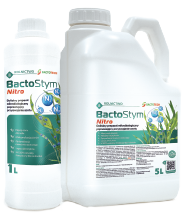
How to apply BactoStym Nitro on farm
BactoStym Nitro fits best when the crop is alive, but nitrogen response feels weak. In other words, you did the timing, yet growth still stalls. This section keeps it simple: when to spray, what to avoid, and how to measure it.
Target crops (where it typically fits)
Cereals, maize, oilseed rape, sugar beet, potatoes, peas, and soy.
Rate and water volume
Application rate: 1 litre per hectare.
Water volume: 200–500 litres per hectare.
Aim for even canopy coverage. Coverage matters more than “hero doses”.
Best timings (use triggers, not calendars)
Use BactoStym Nitro when you see any of these:
- “N is on, but the crop doesn’t move”
You applied nitrogen on time, but the canopy stays flat. Leaves may look pale. Growth stages start spreading.
Timing tip: spray in an active growth window, not during a hard stall. - Cold snaps and stop–start springs
After a cold check, crops often sit still even when the plan is right.
Timing tip: wait for a mild recovery window, then spray to support pick-up. - Sudden dry spells or drying winds
Root uptake slows, so nitrogen response becomes unreliable.
Timing tip: go before stress lands if you can. Otherwise, spray when conditions lift. - Patchy fields and uneven response by zone
If one area moves and another sulks, uptake is usually the limiter.
Timing tip: use a strip to test response in your “problem zone”.
Tank mix and compatibility
Avoid mixing with bactericides. If you need one, split the pass. Avoid very “hot” mixes with high salt load or extreme pH. If in doubt, do a jar test and keep the programme simple.
What to expect
Many growers first notice change in leaf feel and canopy pace within 7–14 days. Roots and crop uniformity often show later. However, weather still matters, so measure it.
Measure it
Set up one treated strip and one control strip. Keep it fair. Measure for 2–6 weeks:
- Growth stage spread across the bout (is it tightening?)
- Leaf colour and leaf size (photos at fixed points)
- Canopy pace (weekly photo point)
- Plant vigour notes after stress events
- Harvest comparison (yield map or weighed loads)
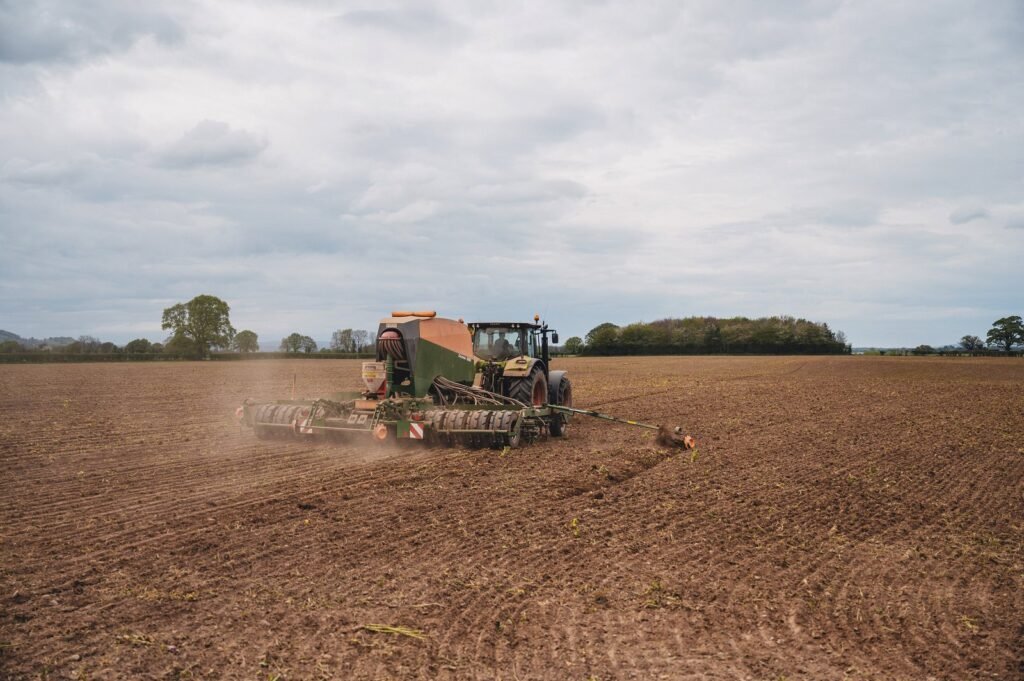
How to cut nitrogen costs (a safe 20–30% approach)
You can cut nitrogen costs without gambling the whole field. However, don’t start by cutting the whole farm. Start with proof. The safest way to explore a 20–30% synthetic nitrogen reduction is a simple step-down strip trial. You keep your normal plan as the control. Then you reduce N on a matched strip and compare.
The low-risk strip-trial method (step-by-step)
- Pick one field with fairly even soil and crop.
Choose somewhere you can harvest cleanly and compare. - Set up two strips (or tramlines)
- Control strip: your normal nitrogen rate and timing
- Test strip: reduce total synthetic N by 20% first
- Keep everything else identical
Same drilling, same sprays, same timings. Otherwise, you won’t trust the result. - Add BactoStym Nitro at the response window
Use it when growth should be moving, especially if stress has slowed uptake. Keep the application consistent across the test strip. - Measure it for 2–6 weeks (then at harvest)
Track canopy pace and uniformity, then confirm with yield map or weighed loads.
When to consider a 30% reduction
Only step up to a 30% cut if:
- the 20% strip holds canopy pace and evenness, and
- the crop keeps tightening growth stages rather than spreading, and
- roots look active (white tips and root hairs), and
- your harvest comparison shows no meaningful penalty
If any of those fail, stick with the smaller cut. It still saves money.
What to measure (simple, repeatable)
Plants/m² and growth stage spread across the bout
Leaf size and colour (fixed photo points)
Canopy pace after stress events
Harvest comparison (yield map or weighed loads)
What this is (and what it isn’t)
This is a practical way to reduce waste and improve nitrogen use efficiency. It helps when the real problem is uptake and stop–start growth. It is not a promise that one product replaces fertiliser. Results vary by soil, moisture, weather, and crop stage. Therefore, treat BactoStym Nitro as a complement to your nitrogen plan and prove it with a strip trial before scaling.
Related guides (useful next reads)
→ Fertiliser price spike 2026: the calm nitrogen plan
→ Fertiliser shortage 2026: how to plan ahead
→ Cut synthetic nitrogen by 50%: what we tested and what we learned
→ Soil compaction in fields: fix uptake before you add more N
→ Shallow roots in crops: why uptake stalls in dry spells
→ Patchy emergence in crops: win the first 10 days
FAQs
Why is my crop not responding to nitrogen even though I applied it on time?
Stress often slows root uptake. So the issue is usually uptake, not supply. Check roots, moisture at depth, and soil structure first.
Is BactoStym Nitro a replacement for synthetic nitrogen?
No. Use it as a complement that supports response and nitrogen use efficiency during stress windows.
How much nitrogen can BactoStym Nitro replace?
Start with a strip trial first. Many farms test a 20% reduction on a strip, then step up only if canopy pace and harvest result hold.
How quickly should I see a difference?
Many growers notice changes in canopy pace within 7–14 days. However, weather and crop stage still matter, so measure it.
When is the best time to spray BactoStym Nitro?
Use it when growth should be moving but the crop stays flat, or when stress has slowed response. Spray in an active growth window and aim for even coverage.
Can I mix BactoStym Nitro with liquid fertiliser or PPPs?
Often yes, but avoid bactericides and very harsh mixes. If in doubt, split the pass and keep it simple.
Does it work on cereals and oilseed rape?
Yes. It also fits maize, sugar beet, potatoes, peas, and soy. Timing matters more than crop.
What’s the best way to prove it pays?
Run a treated strip versus a control strip. Measure root digs, canopy pace, growth stage spread, and harvest result.
Should I add more nitrogen if the crop looks pale after stress?
Not automatically. Pale leaves can follow stress even when nitrogen is present. Fix uptake first, then feed for growth once the crop is moving again.
What if the field is patchy, with one area responding and another stuck?
Treat it as a diagnosis clue. Usually the “stuck” zones have tighter structure, colder soils, or less moisture at depth.
Further reading
Wrap up
If your crop is not responding to nitrogen, the answer is rarely “just add more”. Most seasons, stress slows uptake first. Therefore, start with roots, moisture, and soil structure. Then use foliar support in the windows when timing matters. Finally, prove everything with a simple treated strip versus a control strip. That is how you cut nitrogen costs without gambling yield.