Cut synthetic nitrogen by 50% sounds risky, and in many fields it would be. That is why this post matters. We did not write it as a theory piece. We wrote it because we ran a real wheat field trial and saw a result worth sharing. In this test, synthetic nitrogen was reduced by 50% on a trial field, while biological support was used to help maintain crop performance. The key point is this: the reduced-N field delivered the same yield as the full-rate control. That makes the result important, not because it proves every field can safely halve nitrogen, but because it shows what may be possible when nitrogen efficiency is improved in the right system.
This matters at a time when fertiliser costs stay high and growers want practical ways to reduce spend without exposing the crop to unnecessary risk. However, the lesson is not “cut nitrogen everywhere.” The real lesson is to understand where a reduced synthetic N approach may work, what the risks are, and what needs to be measured before making a wider decision. This guide explains how the field trial was set up, what happened, what the result does and does not prove, and what farmers should check before trying a similar approach on their own farm.
Quick Answer
In our wheat field trial, we cut synthetic nitrogen by 50% on a test field and kept the same yield as the full-rate control. However, this was a measured trial on a specific field, not a blanket recommendation for every crop. The result matters because it shows that, in the right situation, biological support may help improve nitrogen efficiency enough to reduce synthetic N use. Therefore, the safest way to use this result is as a trial-led starting point, not a universal rule.
Key Facts
Main result: Synthetic nitrogen was cut by 50% on a wheat trial field while yield matched the full-rate control.
Why it matters: This suggests that, in the right conditions, improved nitrogen efficiency may reduce the need for full synthetic N input.
What this was: A real field trial, not a lab test and not a blanket recommendation for every field.
What it does not prove: It does not prove that every wheat crop can safely halve nitrogen without risk.
Main farmer question: Can reduced synthetic N work without hurting yield?
What to check first: Crop evenness, rooting, soil condition, stress level, and whether the field is suitable for a measured strip trial.
Where biology fits: Biological support may help the crop use nitrogen more efficiently, but it works best inside a well-managed system.
Why proof matters: Big nitrogen cuts should be tested, measured, and compared against a control, not guessed.
Why We Wanted to Cut Synthetic Nitrogen
Nitrogen is one of the biggest costs on many farms. When fertiliser prices rise, every extra kilo matters. That is why more growers are asking the same question: can we cut synthetic nitrogen and still protect yield? At the same time, pressure on nitrogen use is increasing. Water quality concerns, tighter rules, and more scrutiny around losses are pushing farmers to think more carefully about how much fertiliser they apply and how efficiently the crop uses it.
We also see a practical problem in the field. In some areas, it is already harder to apply nitrogen as freely as before, especially near watercourses or in more sensitive zones. As a result, growers need better nitrogen efficiency, not simply more product. That is why we ran this trial. We wanted real field data, not just theory. The aim was simple: to test whether we could cut synthetic nitrogen and use bacterial products to support the crop, so the farmer could lower fertiliser spend without losing yield.
How We Set Up the Wheat Trial
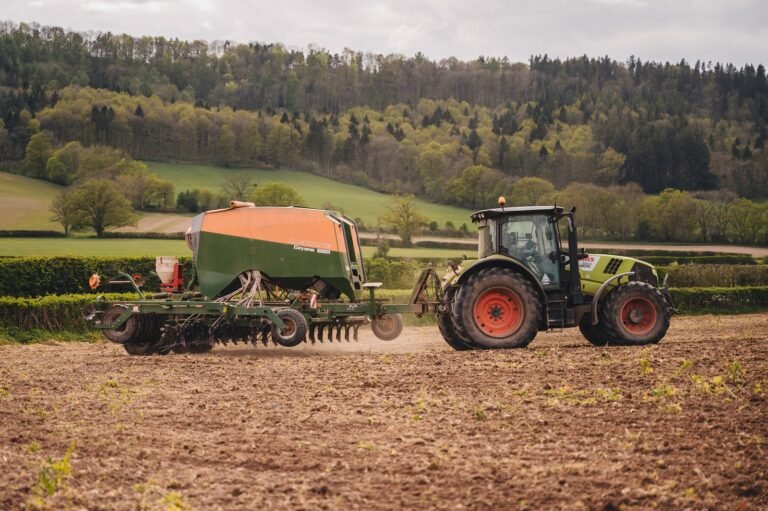
To answer the question properly, we kept the trial simple and clear. We used two wheat fields and compared the standard nitrogen plan with a reduced-N approach. Trial setup:
| Field | Nitrogen plan | Other conditions |
|---|---|---|
| Control field | Full standard rate of synthetic nitrogen | Same variety, soil, weather, drilling, crop protection, and general management |
| Test field | 50% less synthetic nitrogen | Same variety, soil, weather, drilling, crop protection, and general management |
This gave us a fair side-by-side comparison. The main difference was the nitrogen strategy.
- On the control field, we followed the usual farm practice and applied the full synthetic nitrogen rate. That gave us a strong reference point.
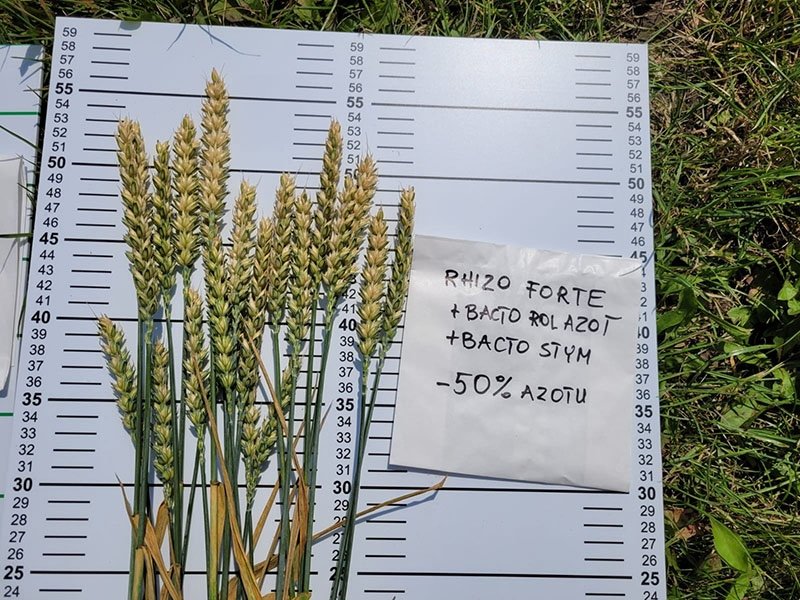
- On the test field, we cut synthetic nitrogen by 50%. To support the crop, we used three bacterial products: Bactorol Nitrogen; BactoStym and RhizoForte. These products were used to support nitrogen availability around the root zone and help the crop build a stronger root system.
Apart from the nitrogen rate and the biological support, we kept the rest of the management the same. That matters because it means the result was driven mainly by the fertiliser strategy, not by unrelated changes elsewhere in the system.
What Happened When We Cut Synthetic Nitrogen by 50%
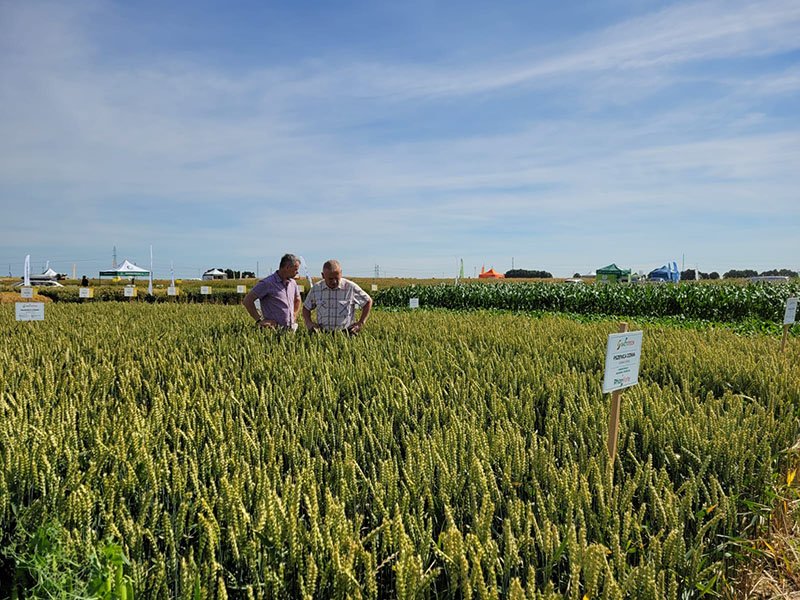
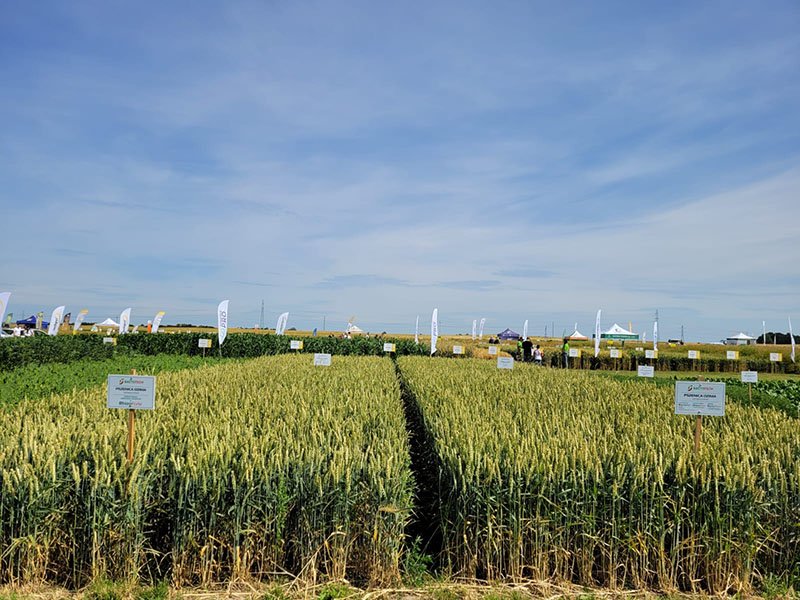
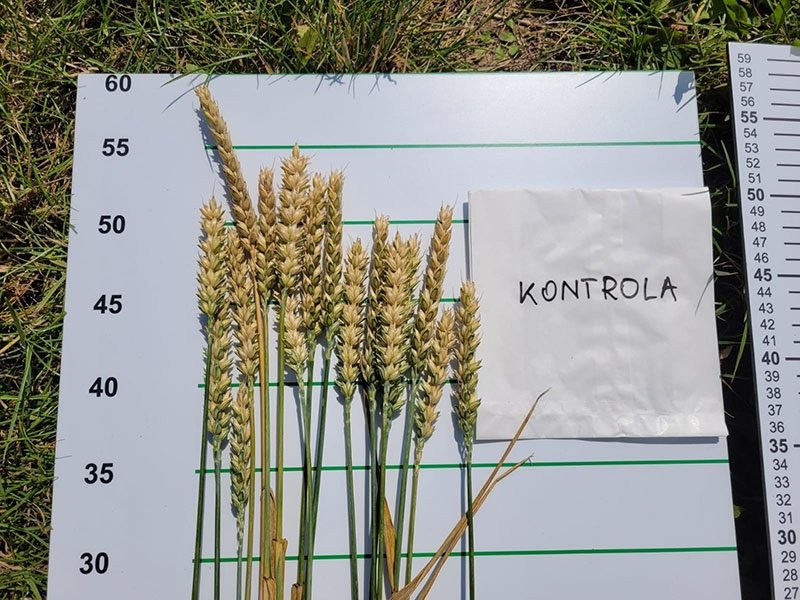
At harvest, the result was clear. The wheat yield on the test field matched the yield on the control field, even though synthetic nitrogen had been cut by 50%. That is what made the trial so important. The crop on the reduced-N field stayed even and productive under real farm conditions. We did not see the drop in output that many growers would normally expect after such a large cut in synthetic nitrogen.
The clearest difference was in fertiliser use. The test field needed much less synthetic nitrogen than the control. As a result, the fertiliser cost per hectare was lower.
In simple terms, the trial showed this: the same yield was achieved with less synthetic nitrogen on the test field. That does not mean every field will respond in the same way. However, it does show that, in the right situation, better nitrogen efficiency can create real room to reduce fertiliser spend without losing yield. For us, that is the key message. The opportunity is not blind nitrogen cutting. The opportunity is to test whether the crop can do more with less, then measure the result properly.
Why this result matters
Fertiliser remains one of the biggest costs on farm. Therefore, any result that shows scope to reduce synthetic nitrogen without losing yield deserves attention. It also matters for a second reason. Many growers assume that a big cut in synthetic N must always lead to a weaker crop. This trial shows that the picture can be more nuanced. In some situations, the system may be able to hold performance with less synthetic input than expected.
That does not remove the risk. However, it does show why measured field trials are worth doing. They turn a bold idea into something you can test, compare, and judge properly.
What this result does and does not prove
This trial shows that one wheat field held yield with 50% less synthetic nitrogen. However, it does not prove that every field can do the same. It supports the idea that reduced-N strategies are worth testing, but only through careful trials, controls, and field measurements.
Why We Do Not Recommend 50% as Standard Farm Practice
The trial result was very positive. However, we need to be careful with how we use it. Just because one test field held yield with 50% less synthetic nitrogen does not mean every farm should do the same next season. This was a trial field. We could accept more risk because the aim was to test what was possible. On a working farm, the risk feels very different. A serious drop in yield would affect margin, cash flow, and confidence.
Field conditions also change the picture. Soil type, weather, rooting, crop stress, and field history all affect how safely nitrogen can be reduced. What worked in this season on this field may not work in the same way elsewhere. That is why we do not recommend a 50% cut in synthetic nitrogen as standard practice. We see this result as proof that there is room to improve nitrogen efficiency. However, the next step on real farms should be smaller, safer, and measured against a control.
A Safer First Step: Around 30%
For most farms, a smaller first step makes more sense. Instead of jumping straight to a 50% cut, we suggest starting with around 30% less synthetic nitrogen on a small test area. This still creates a meaningful fertiliser saving. At the same time, it keeps more safety in the system. That makes it a better fit for normal farm conditions, where the goal is to protect margin as well as test a new approach.
The safest way to do this is with a simple on-farm strip trial. Keep one part of the field on the normal nitrogen plan. Then reduce synthetic nitrogen on a few tramlines or a small block and compare the result at harvest.
Watch the crop through the season. Check colour, rooting, evenness, and final yield. If grain quality matters, check that too. This gives you real data from your own field, under your own management.That is the smart way to use this trial result. Start with a smaller cut, measure it properly, and scale up only if the field proves it can carry the change.

Who should test this approach carefully
This type of trial makes most sense on the right field first. It suits growers who want proof, not guesswork. The best fields to test are usually even fields. Rooting should be good. Soil structure should be sound. The crop should also have a fair chance to use nitrogen efficiently.
It also helps if the field is not already under obvious stress. Severe compaction, poor establishment, shallow roots, or patchy growth all raise the risk. In those cases, the crop may struggle before nitrogen rate even becomes the main issue.
A strip trial is usually the safest place to start. That way, you can compare reduced synthetic nitrogen with the standard plan in the same season and in the same field. This gives a much stronger answer than changing the whole farm at once.
Higher-risk situations need more caution
Some situations carry more risk from the start. Milling wheat is one example, because protein can matter as much as yield. Fields with weak rooting or uneven crops are also riskier. The same is true where soil nitrogen supply is uncertain or weather stress is likely. In those cases, a large cut in synthetic nitrogen is harder to justify. The better approach is to test small, measure carefully, and expand only if the result earns confidence.
Simple rule
Do not start with the hardest field. Start with the field most likely to give a fair test.
What to measure before trying reduced synthetic nitrogen
Before trying reduced synthetic nitrogen, check crop evenness, roots, soil structure, and stress level. Then compare a reduced-N strip with a standard control in the same field. Measure yield, crop response, and grain quality where needed. That is the safest way to test whether lower synthetic nitrogen is truly working.
How the biological support fitted into the trial
On the test field, we did not simply cut synthetic nitrogen and hope for the best. We used biological support to help the crop make better use of nitrogen in the soil and around the root zone.
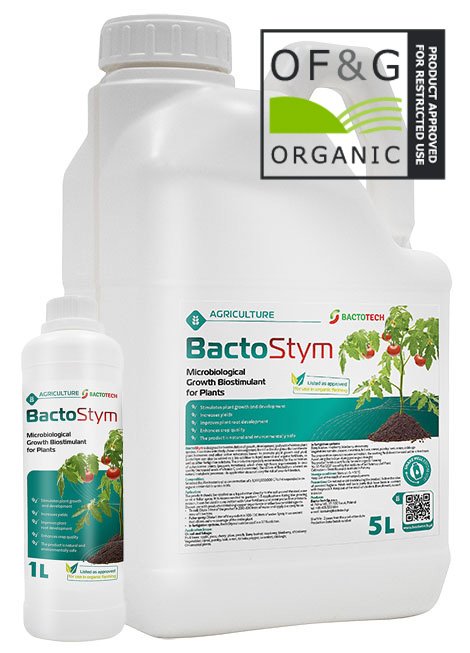
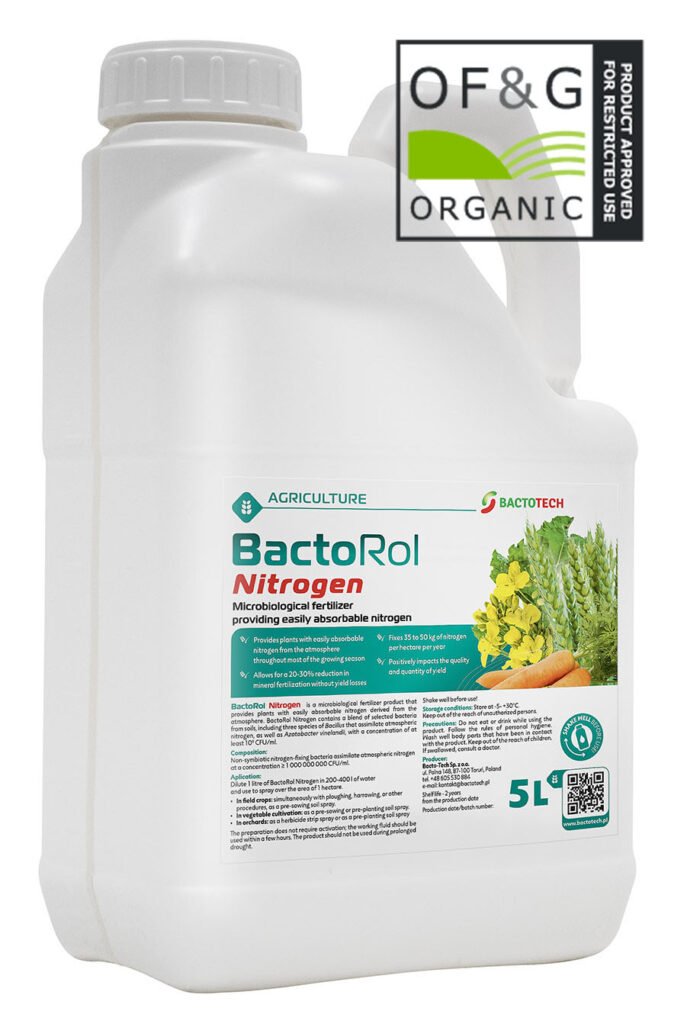
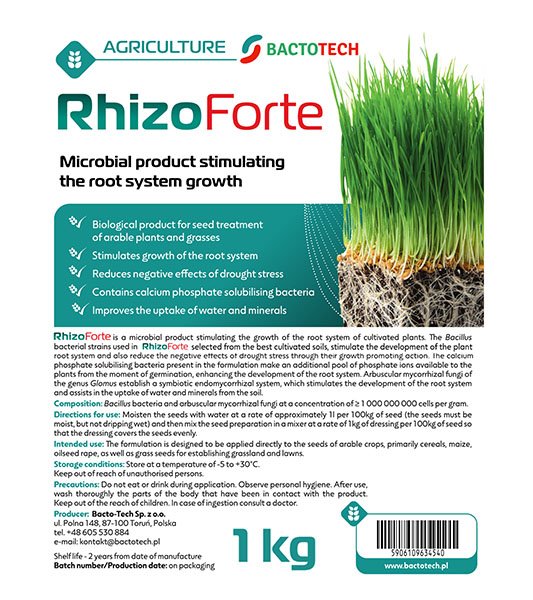
BactoRol Nitrogen was used to support nitrogen availability in the root zone. BactoStym was used to support crop vigour and nitrogen efficiency during growth. RhizoForte was included to support stronger root development and help the crop explore more soil.
Together, these products were used to support the crop under a lower synthetic nitrogen rate. The aim was not to remove fertiliser completely. The aim was to help the crop work more efficiently with less synthetic input. That point matters. This trial was not about cutting nitrogen at random. It was about testing whether biological support could help the crop hold performance when synthetic N was reduced.
On this field, that approach worked. The reduced-N field matched the control for yield. However, the safest way to read that result is this: biological support may help lower synthetic nitrogen work better, but it should still be tested carefully under real farm conditions.
What farmers should measure before trying it
Before trying a lower synthetic nitrogen plan, check the field first. A reduced-N strategy makes most sense where the crop is even, roots are working well, and the field is not already under heavy stress. Start with crop evenness. Then dig roots and check depth, branching, and overall health. After that, look at soil structure. If compaction, smearing, or weak rooting are already present, the risk is higher from the start.
The safest way to test this is with a control. Keep one strip or area at the normal nitrogen rate. Then compare it with the reduced-N area in the same field. That gives you a fair answer under the same season and the same conditions. Keep the records simple. Track total nitrogen applied, crop colour, crop evenness, root digs, and final yield. If grain quality matters, track protein as well.
| What to measure | Why it matters |
|---|---|
| Crop evenness | Shows whether the field is suitable for a fair test |
| Root depth and root quality | Helps judge whether the crop can use nitrogen efficiently |
| Soil structure | Shows whether compaction may distort the result |
| Total nitrogen applied | Gives a clear record of the treatment difference |
| Crop colour and vigour | Helps track in-season response |
| Reduced-N strip vs control strip | Gives the trial real value |
| Final yield | Shows whether output was protected |
| Grain quality or protein, if relevant | Important where market spec matters |
What this means for farmers
The main lesson from this trial is not that every farm should cut synthetic nitrogen by 50%. The real lesson is that nitrogen efficiency may be improved more than many growers expect, if the field, the crop, and the support system are right. For most farms, the practical next step is smaller and safer. Start with a modest reduction on a small area. Keep a proper control. Then compare the result at harvest.
This matters because fertiliser remains one of the biggest costs on farm. If a crop can hold performance with less synthetic nitrogen, even on part of the farm, the margin effect can be significant.
At the same time, the trial shows why proof matters. Big savings claims are easy to make. Good field comparisons are much harder. That is why the smartest growers will test first, measure properly, and scale only what earns confidence. In simple terms, this trial shows that lower synthetic nitrogen is worth testing. However, it should be tested with care, not copied blindly.
FAQs about cutting synthetic nitrogen
Can you really cut synthetic nitrogen by 50% and keep yield?
Yes, in our wheat field trial we did. The test field matched the yield of the full-rate control. However, this was one measured field trial, not a rule for every farm.
Does this mean every farm should cut synthetic nitrogen by 50%?
No. We do not recommend that as standard practice. The trial shows what happened on one field, under one setup. Most farms should take smaller, safer steps and test them against a control.
What is a safer first step?
For most farms, a smaller reduction makes more sense. Around 30% is a more practical place to start, especially on a small block or a few tramlines.
What type of field is best for testing this?
Start with a field that is even, well rooted, and free from obvious stress. Good soil structure and a healthy crop give you a fairer test.
What type of field is riskier?
Fields with compaction, shallow roots, patchy growth, or uncertain soil nitrogen supply carry more risk. Milling wheat can also raise the risk, because protein matters as much as yield.
Should I test this on the whole farm at once?
No. Start with a strip trial or a small test block. Keep one area at the normal nitrogen rate and compare the results at harvest.
What should I measure in the trial?
Measure crop evenness, root depth, crop colour, total nitrogen applied, final yield, and grain protein where relevant. A reduced-N strip only helps if you compare it with a proper control.
Did the biological products replace synthetic nitrogen?
No. We did not try to remove fertiliser completely. We used biological support to help the crop work more efficiently under a lower synthetic nitrogen rate.
Which products were in the trial?
We used BactoRol Nitrogen, BactoStym Nitro, and RhizoForte on the test field alongside the reduced synthetic nitrogen plan.
What is the main lesson from the trial?
Do not read the lesson as “cut nitrogen everywhere.” Read it as this: reduced synthetic nitrogen can be worth testing when the system is right and you compare it properly.
Conclusion: Cutting Synthetic Nitrogen with Less Risk
Our wheat trial showed something very encouraging. With the right biological support, it was possible to cut synthetic nitrogen and still protect yield on the test field. We reduced synthetic nitrogen by 50% and matched the wheat yield of the control, while lowering fertiliser spend.
At the same time, we want to stay realistic. A 50% cut is a big step. It suits a trial field more than normal farm practice. That is why our practical advice is more cautious. For most farms, a first step of around 30% makes more sense, tested on a small area and compared with a proper control.
In the end, the goal is simple:
- use nitrogen more efficiently,
- protect yield and margin,
- and reduce pressure on the environment.
That is the real value of this trial. It does not say “cut nitrogen everywhere.” It says lower synthetic nitrogen is worth testing carefully, measuring properly, and scaling only when the field proves it can work.
Related guides
- If you want to go deeper into the wider nitrogen-efficiency picture, start with our guide on reduce nitrogen fertiliser use. It explains how to cut waste without asking the crop to carry all the risk.
- It also helps to read crop not responding to nitrogen, because one of the biggest mistakes is to assume the field always needs more N when the real issue may be poor access, weak roots, or timing.
- Rooting matters here too. That is why soil compaction in fields is an important companion guide, because restricted roots make reduced-N strategies much harder to judge fairly. The same goes for shallow roots in crops, since poor root reach can limit nitrogen use before rate becomes the main issue.
- Also take a look at our reduce farm input costs post. That page puts nitrogen efficiency into the wider margin picture, alongside phosphorus access, residue breakdown, establishment, and diesel-heavy rework.
Thinking about testing a lower synthetic nitrogen plan on your own farm?
Start small, keep a control, and measure the result properly. If you want help planning a safe strip trial with BactoRol Nitrogen, BactoStym, and RhizoForte, get in touch and we can help you build a simple test that fits your field.
Editorial note
This trial took place under real field conditions, but it was still a trial. Do not treat the 50% reduction as a blanket recommendation for every farm. Soil type, weather, rooting, crop stress, and grain quality targets can all change the result. The safest approach is to test a smaller reduction first, compare it with a control, and scale up only if the field proves it can carry the change.