

Fertiliser price spike 2026
Fertiliser price spike headlines usually trigger the same question on farm: what are my alternatives to artificial fertilisers? You cannot control shipping routes or geopolitics. However, you can cut how exposed the farm is to nitrogen supply shocks. Start by improving uptake and reducing waste first. Then add biological support that complements fertiliser, rather than pretending it replaces it.
Quick Answer
A fertiliser price spike often hits nitrogen first because ammonia and urea supply depends on energy, factories, and shipping. When supply tightens, prices jump and availability drops. The most realistic fertiliser alternatives focus on efficiency.
First, tighten timing and reduce losses. Next, remove uptake blockers like cold roots, compaction, and residue tie-up. Finally, use biology to support steadier rooting and response, alongside fertiliser, and prove it with a simple strip trial.

Fertiliser Price Spike – KEY FACTS
What’s happening: Disruption in Gulf shipping is hitting global fertiliser supply chains.
Why nitrogen moves first: Ammonia and nitrogen ingredients rely on shipping and energy-intensive production.
UK exposure: The UK produces only part of its nitrogen requirement and imports the rest.
Fertiliser alternatives usually means reducing reliance, not going cold-turkey.
Best alternative approach: Improve nitrogen use efficiency (NUE) first, then add biological support.
Run a treated vs untreated strip and measure plants, roots, and canopy pace.
Fertiliser price spike 2026 – why farmers are searching for fertiliser alternatives
A fertiliser price spike does not just raise costs. It also squeezes decision-making. Availability gets patchy. Buying becomes reactive. Then spring timings get messy. That is why farmers start searching for fertiliser alternatives. Most people do not mean “no fertiliser”. They mean “how do I rely on it less, without losing yield”. That is the sensible goal.
So this post takes a practical line. First comes timing and waste reduction, so every unit of N works harder. Next, remove uptake blockers such as cold roots, compaction, and residue tie-up. After that, add microbial tools to support steadier rooting and response. Use them as a complement to fertiliser, not a replacement.
Further reading:
For the latest context on the current Gulf shipping disruption and why it can trigger fertiliser price volatility, see the Guardian coverage.
For a practical overview of what farmers mean by “alternatives to nitrogen fertiliser” (and what is realistic on farm), see Farmers Weekly.
We wrote a practical “fertiliser shortage 2026” action plan last year, and we also documented what happened when we cut synthetic nitrogen by 50%.
Quick diagnosis: what the fertiliser price spike means on your farm
Use this table to separate a market problem (supply/price) from a field problem (uptake/response). As a result, you take the right action first. Match the market shock and the crop response, then choose the calm next step.
| What you see | Likely driver | What to do now |
|---|---|---|
| Supplier quotes jump week to week | Supply disruption + panic buying | Lock your plan to crop demand and timings, then reduce exposure with efficiency steps. |
| Delivery dates slip or “subject to confirmation” | Logistics squeeze | Order earlier where you can. Also build a plan that needs fewer “perfect” top-ups. |
| Urea/ammonia hard to secure at short notice | Nitrogen supply tightens | Switch focus to NUE: split decisions, protect uptake, and avoid waste. |
| You feel forced into rushed buying | Cashflow + timing pressure | Build a minimum-viable N plan now. Then add only what the crop proves it can use. |
| Crop looks hungry after N went on | Uptake limitation (cold/dry/tight soils) | Check roots and moisture first. Therefore, fix uptake before increasing rate. |
| Big field variability in response | Soil structure, residue, depth, moisture | Run a strip check. In addition, target the worst zones with soil/structure fixes. |
What counts as a real fertiliser alternative in 2026
When farmers search “fertiliser alternatives” during a fertiliser price spike, most are not looking for a miracle. Instead, they want ways to rely less on synthetic N while keeping yield stable. Therefore, the best alternatives usually work as a stack, not a single swap.
1) Efficiency first
This is the cheapest “alternative” because you already pay for the N. Tighten timing, reduce losses, and keep applications aligned with crop demand. As a result, you buy less “insurance nitrogen”.
2) Uptake second
Nitrogen only pays when the crop can take it up. Cold roots, compaction, dry seedbeds, and residue tie-up all cut response. Therefore, root checks and simple soil structure fixes often unlock more value than adding extra units.
3) Biology third (as a complement, not a replacement)
Microbial tools fit best when they help the crop keep moving through stress and improve consistency of response. In addition, residue-cycling biology can reduce early N tie-up, which makes spring decisions calmer. This is not “no fertiliser”. It’s a way to reduce dependence on perfect deliveries.
4) Legumes where they fit
If your rotation allows it, legumes remain the most reliable biological N pathway. However, they still need good establishment and the right inoculation approach to perform.
5) Proof, always
Any “alternative” must earn its place. So run a treated vs untreated strip and measure plants, roots, and canopy pace. Consequently, you can scale what works and drop what doesn’t.
The calm 3-step nitrogen plan during a fertiliser price spike
A fertiliser price spike forces decisions early. However, you still have options.
The key is to treat nitrogen like a risk you manage, not a panic buy. Use this simple order.
Step 1 – Protect the plan first (efficiency)
Start with a “minimum viable” nitrogen plan. Split applications where you can. Then match rate to crop demand and field potential. As a result, you buy less “insurance nitrogen” that often gets lost.
Step 2 – Make uptake reliable (so N actually pays)
Nitrogen only works when roots work. Therefore, check the basics before you add more units: soil moisture at rooting depth, compaction, residue layers, and growth stage spread. Fixing uptake blockers often improves response faster than changing rate.
Step 3 – Add biology to smooth response (fertiliser alternatives that complement, not replace)
This is where practical fertiliser alternatives fit. They help you rely less on perfect deliveries and perfect conditions. They do not claim to remove fertiliser overnight. Instead, they support steadier uptake and crop response when timing matters.
Two tools we use for nitrogen resilience: BactoStym Nitro + BactoRol Nitrogen
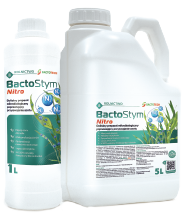
BactoStym Nitro (foliar): when N timing matters, but response is patchy
- Farm problem it targets: You apply nitrogen on time, but the crop does not always respond.
- What it is: A microbiological foliar spray based on Paenarthrobacter nicotinovorans.
- Where it fits: Stress periods (cold starts, dry spells), and crops where canopy building matters (cereals, oilseed rape, maize, sugar beet, potatoes, peas, soy).
- How to apply (label-style): Dilute 1 L in 200–500 L water and spray for even plant coverage.
Evidence snapshot
In a nitrogen-free lab medium, BactoStym Nitro increased measured ammonium nitrogen strongly over three weeks (from 1.5 to 60.9 mg/dm³). The same test reported an increase in Kjeldahl nitrogen (from 129 to 170 mg/dm³ by week 3). An external lab analysed samples under an ISO/IEC 17025 accredited quality system.
Treat it as a response stabiliser. Use it when the crop needs to “pick up” quickly. Pair it with sensible nutrition. Then validate it with a strip trial.
BactoRol Nitrogen (soil/rhizosphere): when nitrogen feels “leaky”
- Farm problem it targets: Spend goes up, but response feels variable.
- What it is: A nitrogen-support blend that includes Azotobacter vinelandii plus Bacillus partners (B. subtilis, B. amyloliquefaciens, B. licheniformis).
- What it supports: Biological nitrogen supply in the root zone and better nitrogen use efficiency (NUE). It also supports rooting and early vigour.
- Where it fits: Cereals, maize, rapeseed, potatoes, sugar beet, peas, soy.
- How to apply: Dilute 1 L in 150–200 L water per hectare. Use it as a soil application and it can fit alongside cultivations (for example harrowing or ploughing).
Evidence snapshot
In a controlled maize pot trial with no mineral nitrogen (P+K only), the treated plants grew taller by week 12 (179 cm vs 166 cm). The same trial reported stronger shoot and root growth traits. It also reported cob performance improvements: fresh cob mass +41%, dry mass +34%, and grains per cob 3.8x versus the control.
Think “reduce waste and stabilise response”. It helps most where uptake varies by zone or season. Again, prove it with a treated strip and simple measurements.

When to apply during a fertiliser price spike (a simple on-farm calendar)
Use this as a timing guide. It helps you treat biology as a fertiliser alternative that complements N, not a full replacement.
Autumn (post-harvest to pre-drilling)
Best for: building a steadier base so spring decisions feel calmer.
Use: BactoRol Nitrogen if you want early nitrogen support in the root zone.
Trigger: “Next spring I don’t want to rely on perfect deliveries.”
What to do: Apply in moisture, then keep your spring plan flexible.
What to check: residue breakdown speed, soil tilth, rooting depth in early spring.
Drilling to early emergence
Best for: setting up uniformity so N pays later.
Use: BactoRol Nitrogen if you want early rhizosphere support before the crop races away.
Trigger: “This field always starts uneven and then timings go messy.”
What to do: Keep the programme simple. Don’t force complicated tank mixes.
What to check: plants/m², emergence spread, early root digs.
Early spring restart (when growth begins to move again)
Best for: stabilising response when nitrogen feels “leaky”.
Use: BactoRol Nitrogen.
Trigger: “N is planned, but I don’t trust response this year.”
What to do: Apply ahead of steady growth, not during a hard stall.
What to check: root hairs, new white root tips, growth stage spread across the field.
In-season foliar windows (when timing matters most)
Best for: improving uptake when the crop should respond but doesn’t.
Use: BactoStym Nitro (foliar).
Trigger: “I applied N on time, but the crop still looks flat.”
Another trigger: “Growth stages are spreading across the bout.”
What to do: Spray during active growth. Aim for even coverage.
What to check: leaf feel, canopy pace, and a treated vs untreated strip.
Stress periods (cold starts, dry spells, hot winds)
Best for: keeping canopy building moving through short shocks.
Use: BactoStym Nitro (foliar).
Trigger: “Forecast looks rough and I need the crop to keep moving.”
What to do: Go in before the stress lands where possible. If stress already hit, wait for a recovery window.
What to check: regrowth within 7–14 days, plus tighter growth stages after the pass.
After stress (recovery phase)
Best for: helping the crop “pick up” once conditions improve.
Use: BactoStym Nitro (foliar).
Trigger: “Weather has lifted, but the crop is still sulking.”
What to do: Spray when leaves can take up product. Don’t chase it in poor conditions.
What to check: new green growth, improved canopy evenness, and fewer re-timed passes.
Simple rules that stop mistakes
Avoid bactericides in the same tank. Split the pass if needed.
Keep coverage even. That matters more than hero rates.
Run a strip trial. Proof keeps decisions calm.
What to measure (fast and realistic)
Plants/m² and tillers/plant at fixed points.
Root digs (depth + root hairs).
Growth stage spread across the drill width.
Canopy pace (photo points work fine).
Rework minutes (extra passes and re-timed sprays).

Which one do I choose: BactoRol Nitrogen or BactoStym Nitro?
Choose BactoRol Nitrogen when your problem is base supply and consistency from the soil: nitrogen feels “leaky”, response varies by zone, or you want a steadier foundation going into spring. It fits best in soil/rhizosphere windows (autumn, drilling, early spring restart) and works well when you also want stronger rooting and better NUE.
Choose BactoStym Nitro when the issue is timing and uptake right now: you apply N on time but the crop stays flat, growth stages spread, or a cold/dry spell has slowed canopy building. It fits best as a foliar tool during active growth and stress/recovery periods, to help the crop “pick up” and respond more evenly.
Many farms use both in a simple sequence: BactoRol Nitrogen to stabilise the base, then BactoStym Nitro to smooth response in-season when timing matters.
What this is (and what it isn’t)
This post shares practical options during a fertiliser price spike. It does not promise that microbes replace fertiliser overnight. Instead, it focuses on reducing exposure by improving uptake and consistency, then testing biological tools as a measured add-on. Results vary by soil, moisture, and management, so run a strip trial before scaling.
Quick decision guide
- If supply is tight: lock a minimum viable N plan, then protect uptake.
- If N is on but crops look flat: check roots and moisture first, then consider a foliar uptake tool.
- If response varies by zone: treat it as a soil/structure issue, and stabilise the base in the root zone.
- If you want to rely less on N long-term: improve NUE first, then use biology to smooth response.
Fertiliser Price Spike FAQs:
Why does a fertiliser price spike hit urea and ammonia first?
Because nitrogen fertiliser depends on energy-intensive production and smooth shipping. When energy costs rise or supply routes tighten, urea and ammonia prices usually react quickly. In addition, buyers often rush to secure nitrogen first, which pushes prices up faster.
What are realistic fertiliser alternatives in cereals?
Most “fertiliser alternatives” in cereals do not mean zero fertiliser. Instead, they mean reducing reliance by improving nitrogen use efficiency (NUE). That usually includes better timing and split applications, protecting uptake (roots, soil structure, moisture), reducing residue tie-up, and using biology to stabilise response.
Can I cut N this season without risking yield?
Sometimes, yes. However, it depends on soil supply, crop potential, moisture, and how uniform the crop is. The lowest-risk approach is a step-down trial: keep your normal rate as a control strip, then cut a sensible amount on a matched strip and measure response. Many farms start with a smaller reduction first, then scale what works.
What measurements prove NUE gains?
Keep it simple and repeatable. Track plants/m² and tillers/plant at fixed points, do root digs (depth + root hairs), record growth stage spread across the drill width, and take photo points for canopy pace. Then compare a treated strip vs a control strip at harvest using yield maps or weighbridge tickets. If you want a UK reference for benchmarking cereal growth, AHDB has practical guidance.
Related guides
→ Fertiliser shortage 2026 (plan ahead)
→ Cut synthetic nitrogen by 50% (trial proof)
→ Patchy emergence in crops (win the first 10 days)
→ Soil compaction in fields (unlock uptake)
→ Shallow roots in crops (reach moisture and nutrients)
Ready for a calmer nitrogen plan during this fertiliser price spike?
Tell us your crop, soil type, drilling date, and current nitrogen plan. We’ll suggest a simple “efficiency → uptake → biology” programme for you → Contact BactoTech UK
Last updated: March 2026. We will refresh this post if the supply situation changes.