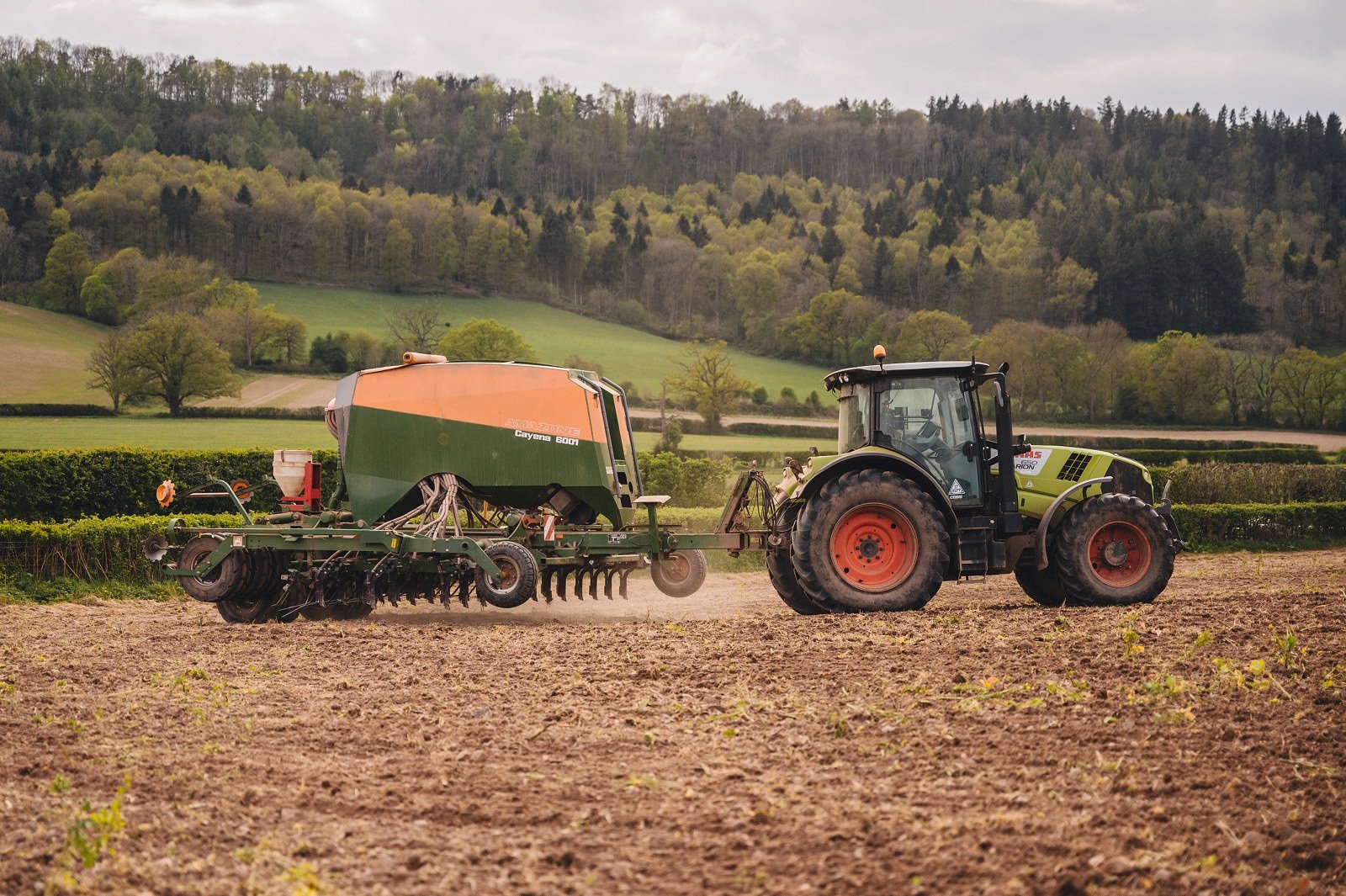
UK fertiliser prices are volatile again in 2026. As a result, planning nitrogen feels like gambling: buy early and tie up cash, or wait and risk shortages and price spikes. This fertiliser supply crisis is exactly why more farms are adding nitrogen-fixing bacteria to their programme, to reduce reliance on imported mineral N.
Quick Answer
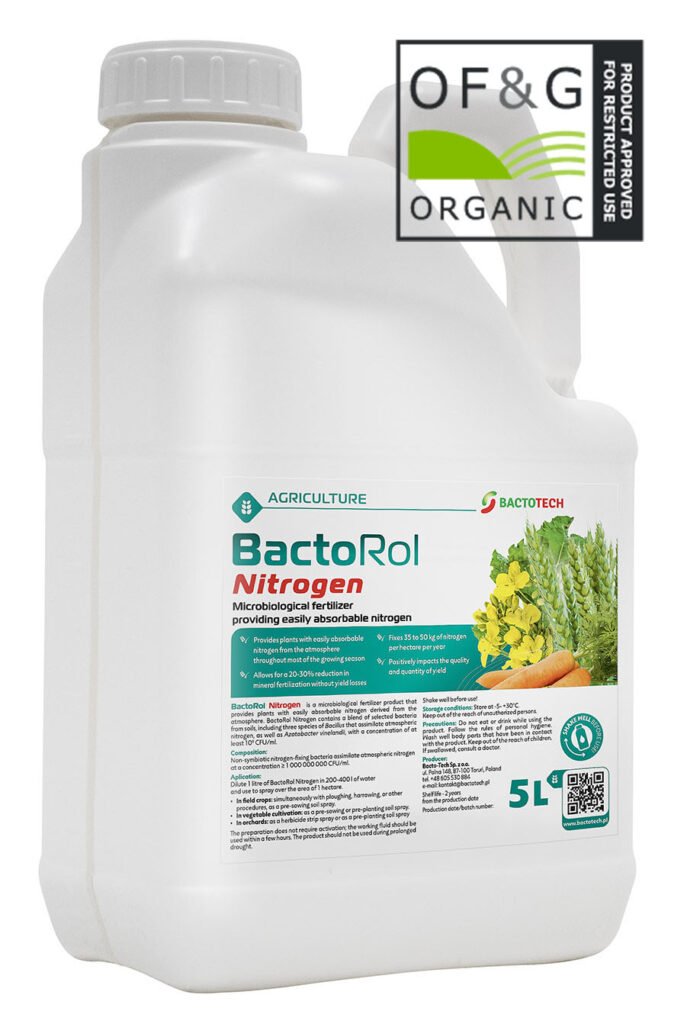
If you want more certainty in a volatile fertiliser market, the quickest lever is to reduce how much mineral nitrogen you must buy. BactoRol Nitrogen is a simple, 1 L/ha biological add-on designed to support nitrogen availability from biology, so your crop is less exposed to global supply shocks and price jumps.
UK Fertiliser Prices – Key Facts
The UK is not self-sufficient in nitrogen fertiliser (roughly 40% produced / 60% imported).
Fertiliser prices are already lifting (e.g., £406/t ammonium nitrate and £424/t granular urea reported for December).
Middle East escalation is increasing risk premiums for gas, freight, and urea trade routes, which can feed straight into nitrogen costs.
Independent 2025 trials reported yield and quality gains when BactoRol Nitrogen was used alongside standard fertilisation.
Last updated: March 2026. We will refresh this post if the supply situation changes.
What’s actually driving the fertiliser crisis right now?
This isn’t just “prices went up”. It’s a stack of risks hitting at once:
- Geopolitics + shipping risk
When key routes and producers in the Middle East are disrupted, urea and ammonia availability tightens fast, and prices react even before physical shortages reach the UK. - Gas price sensitivity
Nitrogen fertiliser is heavily linked to natural gas. When gas moves, nitrogen costs follow. - Import dependency
Because the UK relies on imports for a big share of nitrogen fertiliser, global volatility lands on UK farm budgets quickly.
Diagnosis: is your farm exposed?
| What you’re seeing | What it usually means | Quick check this week |
|---|---|---|
| You’re delaying N buys “hoping it drops” | You’re exposed to supply/freight swings | Ask: “If supply tightens in March/April, what’s Plan B?” |
| You’re cutting N but worried about yield | Risk management vs crop demand | Tighten RB209-based planning + tissue tests/NDVI |
| Patchy crop colour/variable response | Timing, losses, or uptake limits | Look at compaction, root depth, cold soils, moisture |
| Cashflow stress from forward buying | Input volatility is dictating decisions | Build a programme that needs less bought N |
Use RB209 principles for baselines and adjust with field checks.
The practical solution: reduce dependence on bought nitrogen
The idea
Instead of trying to “beat the market”, you reduce how much the market controls you.
BactoRol Nitrogen is designed to support nitrogen availability from biology (nitrogen-fixing bacteria), helping you rely less on mineral N that’s tied to global gas, shipping, and geopolitics. BactoRol Nitrogen testy i wyniki
What this looks like in practice (a sensible approach)
- Keep your agronomy fundamentals (soil structure, pH, organic matter, realistic yield targets).
- Use BactoRol Nitrogen as an add-on to reduce reliance on mineral N where your system allows.
- Measure crop response (so you’re not guessing).
Evidence: independent trial results (2025)
Below are results from 2025 research summaries in the document you provided.
Sugar beet (IHAR-PIB, 2 locations)
Application: 1 L/ha as a pre-sowing soil treatment, alongside standard fertilisation.
| Parameter | Increase in Sypniewo | Increase in Radłówek |
|---|
| Root yield | +6.8 t/ha | +4.2 t/ha |
| Biological sugar yield | +1.4 t/ha | +1.3 t/ha |
| Technological sugar yield | +1.28 t/ha | +1.20 t/ha |
| Sugar content | +0.61% | +0.81% |
Plant health observations: higher chlorophyll index, and lower incidence indicators for some diseases were reported (trial observation, not a pesticide claim).
Potatoes (IHAR-PIB, ‘Anuschka’, 2 locations)
Application: tuber dressing at 200 ml per 100 kg seed potatoes.
| Result area | Sadkowski Młyn (light soil) | Palczyn (better soil) |
|---|
| Stems per plant | 4.7 vs 4.0 (control) | — |
| Tubers per plant (early) | 15.0 vs 11.0 | — |
| Tubers per plot (final) | 123.3 vs 109.8 | 83.8 vs 69.3 |
| Tuber mass per plot (final) | 9,414.7g vs 9,493.8g | 14,160.8g vs 10,174.9g |
| Starch content | 11.9% vs 11.3% | 12.5% vs 12.1% |
What does that mean in money terms
Farmers Weekly reported December pricing around £406/t ammonium nitrate and £424/t granular urea.
That works out roughly as:
| Product | Typical N% | Example price | Approx £ per kg N |
|---|
| Ammonium nitrate | 34% | £406/t | ~£1.19/kg N |
| Urea | 46% | £424/t | ~£0.92/kg N |
So, if a biological programme helps you replace or avoid buying even 35–50 kg N/ha, that’s roughly ~£32–£60/ha worth of nitrogen at those example prices (before you even count risk, logistics, or application timing).
Trial evidence: maize pot trial (nitrogen-fixing bacteria, no mineral N)
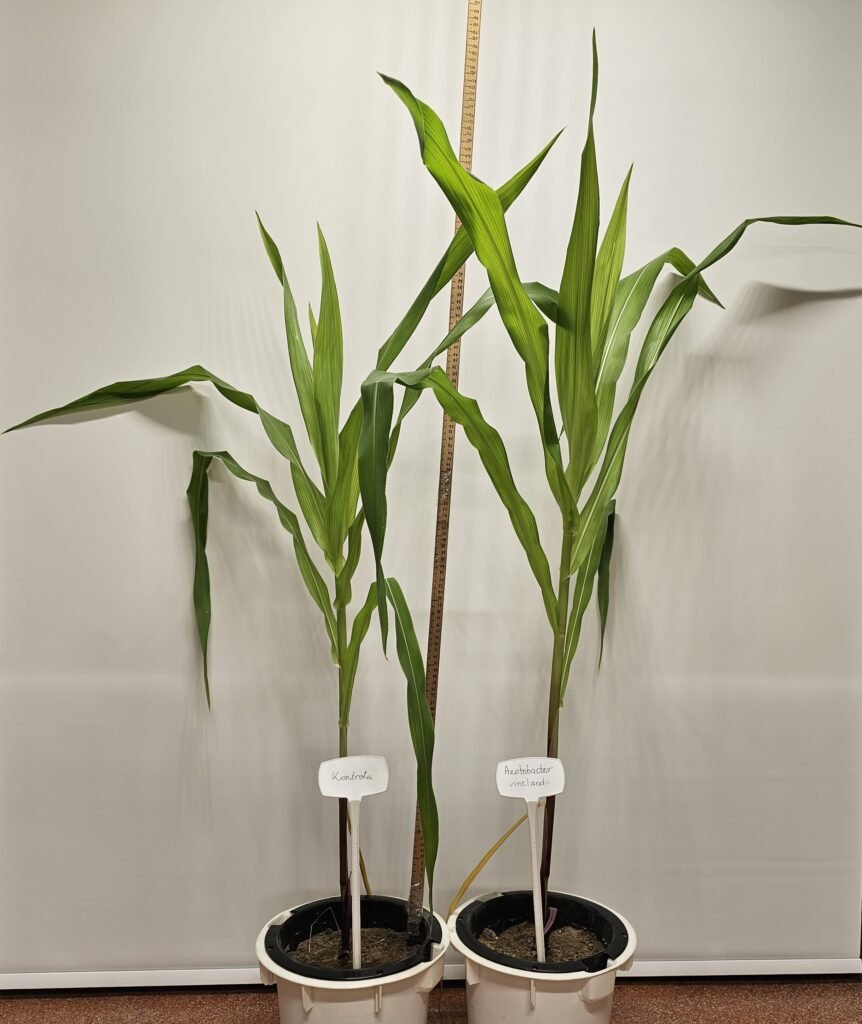
To show what nitrogen-fixing bacteria can do when mineral nitrogen isn’t available, a controlled maize (corn) pot trial was run under artificial lighting at 21°C and 50% humidity. The crop received no mineral N (only P + K). The product (A. vinelandii) was applied pre-sowing to the soil.
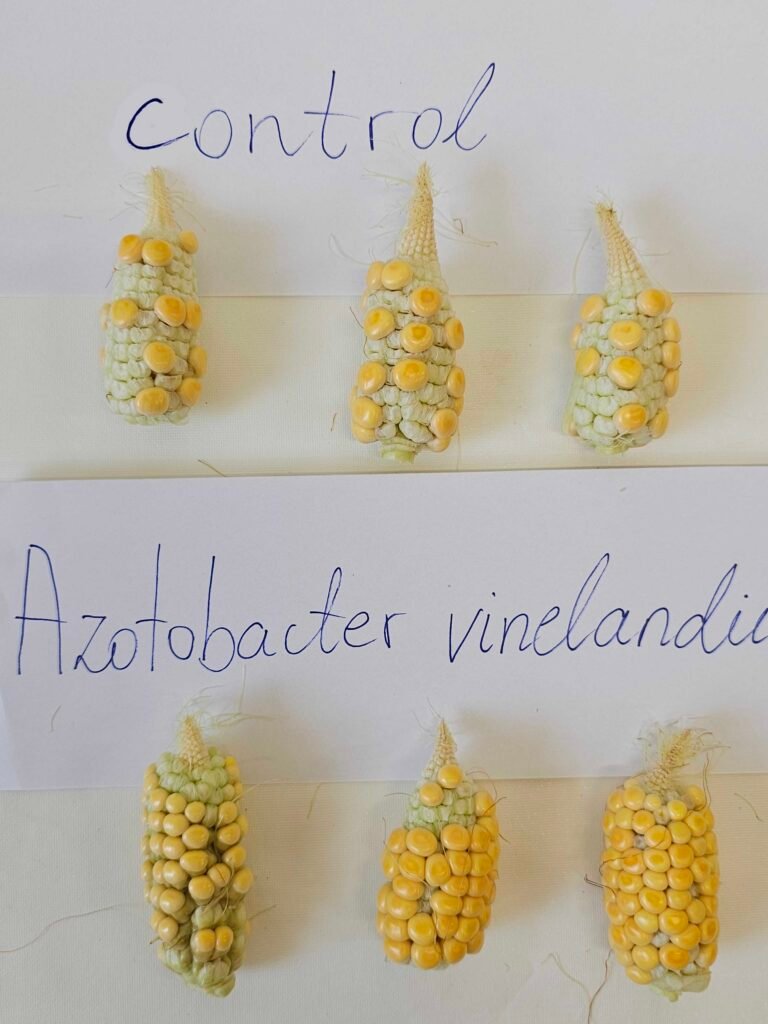
As a result, maize showed stronger early growth and better cob performance versus the untreated control. The trial also reported clear improvements in root mass, total root length, surface area, and root volume, which helps explain the above-ground response.
Plant height over time (treatment vs control)
| Time after sowing | Treatment (cm) | Control (cm) | Difference (cm) | Change vs control |
|---|---|---|---|---|
| 4 weeks | 86 | 85 | +1 | +1.2% |
| 6 weeks | 90 | 85 | +5 | +5.9% |
| 8 weeks | 127 | 123 | +4 | +3.3% |
| 10 weeks | 180 | 168 | +12 | +7.1% |
| 12 weeks | 179 | 166 | +13 | +7.8% |
Cob performance (treatment vs control)
| Metric | Treatment | Control | Difference | Change vs control |
|---|---|---|---|---|
| Cob fresh mass (g/plant) | 29.53 | 20.99 | +8.54 | +41% |
| Cob dry mass (g/plant) | 9.75 | 7.27 | +2.48 | +34% |
| Grains per cob | 76.33 | 20.00 | +56.33 | 3.8× higher |
What this suggests
Even without mineral nitrogen, the treated plants kept building biomass and, most importantly, filled cobs far better. Early chlorophyll fluorescence (up to 6 weeks) also suggested more efficient photosynthesis, which is consistent with improved nitrogen nutrition during early growth.
Important note: This was a controlled pot trial, so it’s a strong proof-of-biology under “no mineral N” conditions. However, field results will always depend on soil, weather, crop demand, and your overall nutrition plan.
How to use BactoRol Nitrogen
Use the method that matches your crop:
For field crops (soil application):
- Apply 1 L/ha in water (the summary example used 200 L water/ha) and incorporate into the top layer of soil.
For potatoes (tuber dressing):
- 200 ml per 100 kg seed potatoes, diluted to cover evenly.
Compatibility basics (keep it practical):
- Avoid close sequencing with bactericides and always follow your label/SDS.
- Biology performs best when soil isn’t stressed (extreme dryness/cold/compaction can blunt response).
Measure it (so it’s a business decision, not a belief)
Pick 2–3 measures and stick to them:
- Leaf colour / SPAD or chlorophyll index trend
- Tissue N at key growth stages
- Canopy uniformity (NDVI/drone if you have it)
- Yield + quality (sugar %, starch %, marketable grade split)
Do / Don’t (fast checklist)
Do
- Use biology to reduce exposure to volatile bought N.
- Keep N plans grounded in RB209 and field reality.
- Trial it properly: treated vs untreated strips, same variety, same field.
Don’t
- Assume any product “replaces all nitrogen” in every season.
- Skip measurement (that’s where the profit proof comes from).
- Mix randomly with bactericides without checking compatibility.
FAQs
Can this replace all mineral nitrogen?
Usually no. The practical win is reducing reliance, smoothing supply risk, and improving nutrient efficiency. Results depend on soil, weather, and your baseline fertility.
Is this only for organic farms?
No. It can fit conventional, organic, and regenerative systems (with compliant use and realistic expectations).
Why does “Middle East/Asia supply” matter to my farm?
Because urea, ammonia, gas, and key shipping routes can be disrupted quickly, and prices move before product even lands in UK ports.
When should I apply it?
Pre-sowing/early soil application for arable crops, or as a tuber dressing for potatoes.
What’s the simplest way to trial it?
2 tramline strips: same seed, same spray programme, same N plan. Measure crop colour/tissue N mid-season and yield at harvest.
Will it work in cold spring soils?
Biology generally slows in cold conditions. That’s why application timing + soil condition matters.
Can I use it with manure/slurry?
Often yes in a wider nutrient plan, but keep programmes sensible and check compatibility.
Is the trial data independent?
Yes: 2025 research by IHAR-PIB across multiple locations and crops.
Related guides from BactoTech UK
If you’re planning your nitrogen this season, these guides will help you make decisions faster:
- Fertiliser shortage in 2026: what’s driving the risk – and how farms can plan around it.
- Nitrogen-fixing bacteria: what they are, how they work, and where they fit best.
- Cut synthetic nitrogen by 50% without losing yield: a practical programme and what to measure.
- Soil microbes for farming: a simple guide to what each group does in real field conditions.
- BactoRol Nitrogen: product overview, use rates, and where it fits in a farm programme.
- Improve nutrient efficiency (NUE): how soil conditions and smart inputs help you get more from every kg you apply.
Sources and further reading (independent)
To keep this article grounded, we also recommend these independent references:
- UK fertiliser prices (pricing benchmarks and trends) – AHDB
- Nitrogen fertiliser market outlook (what’s moving prices and supply) – AHDB
- Industry fertiliser supply warning (risk planning for the season ahead) – AIC
- UK fertiliser prices rising amid disruption – Farmers Weekly
UK fertiliser prices – the takeaway
The fertiliser supply crisis in 2026 is real: prices are moving, supply chains are fragile, and UK farms are exposed because we import a large share of nitrogen fertiliser.
BactoRol Nitrogen is a practical way to reduce dependence on bought mineral N, using nitrogen-fixing biology as part of a measured, farm-ready programme.
If you want, send us: crop, soil type, current N plan, and your normal N spend/ha – and we’ll write you a one-page “nitrogen resilience plan” (timing + mixing + what to measure) that you can hand to your agronomist.
Editorial note: This article is general guidance. Always follow local regulations, product labels, and professional agronomy advice.