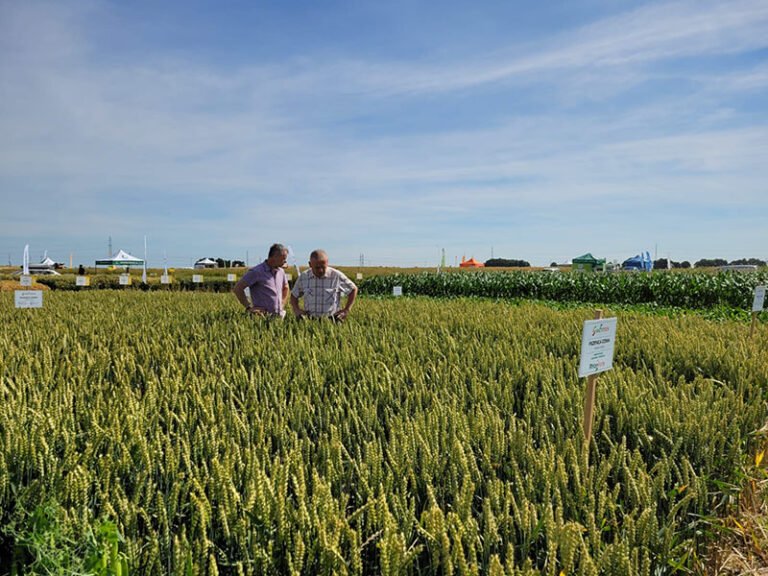

If you want to reduce nitrogen fertiliser use, the goal is not to “starve” the crop. It is to cut waste and make every unit pay. However, nitrogen response often fails for one simple reason: uptake is not guaranteed. Cold snaps, dry spells, compaction, and uneven establishment can all leave nitrogen sitting in the soil instead of building canopy. This guide shows a calm, field-first approach: measure soil N supply, tighten timing and accuracy, fix uptake blockers, then use biology as a proven support tool rather than a replacement.
Quick Answer
To reduce nitrogen fertiliser use, start with the economic optimum, not a guess. First, measure soil N supply and baseline NUE. Next, cut losses by improving timing and application accuracy. Finally, stabilise crop uptake (roots + stress windows) so fewer “rescue units” are needed.

Key Facts
Main goal: Reduce nitrogen fertiliser use without losing yield or protein.
Biggest leak: Weather swings drive leaching and volatilisation risk.
Most reliable lever: Measure SNS/N-Min, then adjust to economic optimum.
Fast wins: Calibrate application, split timing, protect uptake.
Where biology fits: Smooth uptake through stress and improve NUE consistency.
If your goal is not only to cut nitrogen spend, but to improve whole-farm efficiency, it is worth reading our guide on REDUCE FARM INPUT COSTS. It explains how nitrogen efficiency fits into the wider picture alongside phosphorus access, residue breakdown, establishment, and diesel-heavy operations.
Reduce nitrogen fertiliser use – what matters most (before you change rates)
Most nitrogen savings come from three things: correct target, correct timing, and reliable uptake. Therefore, don’t start by cutting rates across the whole farm. Start by finding where nitrogen is being wasted.
- Set the target first
Base your plan on crop demand and soil supply. That keeps cuts sensible and low-risk. - Make timing and accuracy do the heavy lifting
If application is off, the crop pays. Calibrate kit, avoid overlaps, and split where weather risk is high. As a result, you reduce losses without “gambling” yield. - Fix uptake before adding more units
A crop cannot use nitrogen it cannot reach. So check rooting depth, compaction, and growth stage spread. If those are limiting, extra nitrogen often turns into leaching or volatilisation.
Diagnosis table (match what you see to the likely cause)
| What you see | Likely cause | What to check |
|---|
| You applied N on time, but the crop stays flat | Uptake limitation after stress | Root digs + soil moisture at depth + recent cold/dry checks |
| Crop looks hungry even though N is on | Roots cannot access N consistently | Compaction layer depth + shallow roots + growth stage spread |
| Big response in one part of the field, poor response elsewhere | Variable structure or moisture | Compare “good vs bad” zones with a spade test |
| You keep needing late “top-up” N | Stop–start growth, uneven canopy build | Stress history + canopy pace + growth stage spread |
| High rates but weak response | Timing/accuracy losses | Calibration, overlaps/misses, wind + temperature at application |
| Protein swings year to year | Late chase N + uneven uptake | Timing record + canopy evenness + zone protein/yield maps |
Fertiliser price spike 2026 – Crop not responding to nitrogen – Soil compaction in fields – Shallow roots in crops
Measure it (turn “feel” into proof)
If you want to reduce nitrogen fertiliser use safely, you need proof. Therefore, run one treated strip versus one control strip and track a few simple checks for 4–8 weeks. Keep everything else the same, so you can trust the result.
What to measure (simple and repeatable)
Crop response
• Leaf colour and leaf size (photos at fixed points).
• Canopy pace (weekly photo point or NDVI if you have it).
• Growth stage spread across the bout (is it tightening or widening?).
Roots and uptake
• Root digs (depth + root hairs).
• Compaction check (find the limiting layer depth).
• Moisture at 10–20 cm and below the limiting layer.
Nitrogen performance
• N applied (rate + date + conditions).
• Tissue N or protein checks if you already do them.
• Yield map or weighed loads at harvest (treated vs control).
Hidden costs
• Rework minutes (retimed sprays, extra passes, chasing growth stages).
How to set up the strip trial (fast)
- Pick a representative area and a problem zone.
- Mark a control strip and a treated strip.
- Apply your plan. Then measure at the same points each time.
- Decide after harvest, not after one good week.

Simple programme (efficiency → uptake → biology)
Use this as a calm plan to reduce nitrogen fertiliser use without gambling yield. Keep it simple. Prove it on one field first.
Step 1 – Efficiency (stop waste first)
Before you cut rates, make sure the nitrogen you buy can actually pay back.
Do this:
• Set a realistic target based on crop demand and soil supply.
• Calibrate kit and reduce overlaps/misses.
• Split applications where weather risk is high.
• Avoid “insurance units” unless the crop proves it needs them.
What to look for:
• Cleaner canopy build and tighter growth stages.
• Less need for late “top-up” decisions.
Step 2 – Uptake (fix the limiter)
If uptake is weak, extra nitrogen often becomes loss. Therefore, fix the root and structure issues first.
Do this:
• Dig roots in a good area and a bad area.
• Find the limiting layer depth (compaction, smear, capping).
• Check moisture at rooting depth, not just on the surface.
• Reduce traffic in wet conditions and protect structure.
What to look for:
• Deeper roots, more root hairs, steadier canopy pace.
• More consistent response across the field.
Step 3 – Biology (use it to stabilise response, not replace fertiliser)
Once the basics are right, biology can help you rely less on perfect conditions. It can also reduce the urge to “chase” growth with extra nitrogen.
BactoRol Nitrogen (root zone support)
Use when: nitrogen feels “leaky” and response varies by zone or season.
Best windows: autumn / drilling / early spring restart, or ahead of key demand periods.
Role in the plan: support steadier NUE and root-zone performance alongside your N plan.
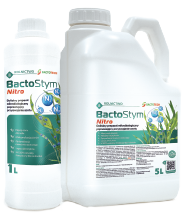
BactoStym Nitro (foliar support in stress windows)
Use when: “N is on, but the crop doesn’t move” after cold or dry checks.
Best windows: active growth, stress and recovery periods, and when growth stages spread.
Role in the plan: support response when uptake stalls, so fewer rescue units are needed.
• Run a treated strip vs a control strip.
• Start with a modest reduction first (many farms test 10–20% on a strip).
• Scale only if canopy pace and harvest result hold.
What to expect (typical reports)
- More consistent nitrogen response across the field.
- Fewer late “top-up” decisions.
- Better rooting and steadier canopy pace through stress swings.
- Clear learning from your strip trial, even in a tough season.
As a result, budgets breathe and risk shrinks.

Payback maths (five numbers to log)
If you want to reduce nitrogen fertiliser use, track five numbers. Then you can judge the programme without guesswork.
- Units planned vs applied (kg N/ha)
Write down what you planned. Then write what you actually applied. - Passes saved (minutes)
Log reworks you avoided (retimed sprays, extra passes, “rescue” trips). - Diesel + labour per pass (£/ha)
Use your own number. Keep it consistent. - Yield and grain protein vs a similar block
Compare like-for-like. Avoid comparing a great field to a poor one. - Programme cost (£/ha)
Include biology and any extra ops. Keep it honest.
Rule of thumb
If (units trimmed × fertiliser £/kg N) + rework savings > programme cost, you’re ahead – even before yield and protein effects.
Measure it (turn “feel” into proof)
Measure a few simple checks every 7–10 days. As a result, you can defend decisions and repeat what works.
Crop response
• SPAD/leaf colour, plus two quick canopy photos (same points each time).
• NDVI/drone snapshots at key stages, if you already have them.
Uptake potential
• Tillers/m² (or plants/m² where relevant).
• Root digs: depth, branching, and root hairs.
Outcome checks
• Grain protein checks where relevant.
• A simple end-of-season note: what you applied, what the crop did, and why.
Context notes
• Weather and soil notes around risk windows (leaching or volatilisation).
This helps you explain “why it worked” rather than guessing.
Field tips: do’s & don’ts
Do
• Calibrate spreaders and sprayers. Basics move the NUE needle.
• Time biological passes around demand and workable conditions.
• Keep clean records. Therefore, audits and choices feel easier.
• Start with a pilot strip. Then scale what your field proves.
Don’t
• Tank-mix with bactericides or strong oxidisers near biologicals.
• Expect biology to hide big rate errors. Use it to cut waste, not starve crops.
• Skip measurement. Proof protects budget and confidence.
The products behind this programme
- BactoRol Nitrogen
Combines Azotobacter vinelandii with Bacillus partners to support nitrogen use efficiency. It fits best when you want steadier response and less reliance on “extra units” added under pressure. BactoRol Nitrogen.
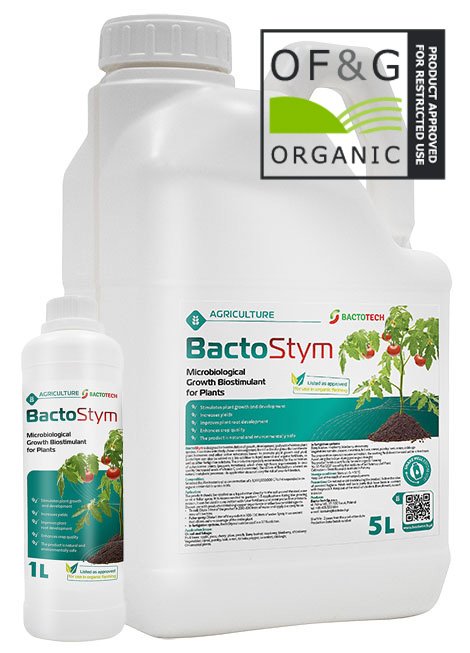
- BactoStym
A microbial biostimulant designed to buffer cold and drought checks. It supports root:shoot balance and helps crops use applied nutrition more efficiently when growth would otherwise stall. BactoStym.
- BactoStym Nitro
A microbiological foliar tool designed for the moment you apply nitrogen on time, but the crop still stays flat. It uses the endophytic bacterium Paenarthrobacter nicotinovorans to support nitrogen efficiency when root uptake slows during cold snaps or dry spells. Use it as a complement to your nitrogen plan, especially in stress and recovery windows, and prove it with a treated strip versus a control strip. BactoStym Nitro.
Compatibility & safety
Natural and non-GMO. Always follow labels and safety data. In addition, avoid close sequencing with bactericides.
Key Facts
How can I reduce nitrogen fertiliser use without losing yield?
Start with a realistic target based on crop demand and soil supply. Then improve timing and application accuracy, and fix uptake blockers like compaction and shallow roots. Finally, test any reductions on a strip before scaling.
What’s the fastest way to reduce nitrogen fertiliser use this season?
Stop waste first. Calibrate kit, avoid overlaps, split applications where weather risk is high, and only add “top-up” units if the crop proves it can use them.
Why does nitrogen sometimes “not work” even when I apply it on time?
Uptake often limits response. Cold snaps, dry spells, compaction, and shallow roots can slow root activity, so nitrogen sits in the soil instead of building canopy.
Should I cut N rates across the whole farm?
Not first. Run a pilot strip on one representative field. If canopy pace and harvest result hold, then scale the change.
How much nitrogen can I cut safely?
It depends on soil supply, season, and crop potential. Many farms start with a modest reduction on a strip (for example 10–20%) and step up only if measurements and harvest results stay strong.
What should I measure to prove NUE gains?
Keep it simple: canopy photos every 7–10 days, growth stage spread, root digs (depth and hairs), and a treated vs control strip at harvest. Add protein checks if relevant.
When should I use BactoRol Nitrogen?
Use it when nitrogen feels “leaky” and response varies by zone or season. It fits best in root-zone windows such as autumn, drilling, or early spring restart.
When should I use BactoStym?
Use it when crops face cold or drought checks and growth becomes stop–start. It supports steadier vigour and more reliable use of applied nutrition.
When should I use BactoStym Nitro?
Use it when “N is on, but the crop won’t move”, especially during stress and recovery windows. Treat it as a foliar support tool that complements fertiliser, and prove it with a strip trial.
Can I tank-mix these products with fertiliser or crop protection sprays?
Often yes, but avoid bactericides and harsh oxidisers near biologicals. Check label compatibility, water quality, and pH. When in doubt, split the pass.
Does this help with Farming Rules for Water compliance?
It can help you show you actively manage nitrogen efficiency. However, you still need a nutrient plan that matches crop need and soil supply, plus clear records.
What if my fields are patchy and response varies within the same field?
Treat it as a diagnosis clue. Compare roots and structure in a “good” zone and a “bad” zone. Fix the limiter first, then decide rates and products based on what you find.
Related guides
BactoTech guides
→ Fertiliser price spike 2026 (context)
→ Fertiliser shortage 2026 (planning)
→ Crop not responding to nitrogen? (uptake bottleneck + foliar support)
→ Cut synthetic nitrogen by 50% (trial proof)
Trusted external guidance
→ AHDB RB209 Nutrient Management Guide (baseline planning)
→ AHDB: Adjusting N rates and alternative fertiliser management (economic optimum)
→ AHDB: Reduce emissions by avoiding excess nitrogen (practical levers + precision)
→ GOV.UK: Farming Rules for Water (England) – nutrient management compliance
Ready to reduce nitrogen fertiliser use – and the stress that goes with it?
→ Get in touch: Contact BactoTech UK
→ Also read more about STRAW TYING UP NITROGEN and HEREFORDSHIRE FARMING PROBLEMS WITH NITROGEN. Before you change rates any further, it is worth asking the wider question: Can Farmers Afford Not to Trial Biological Tools This Season?
Editorial note: General guidance only. Always follow product labels and local regulations. Last updated: March 2026.