If nitrogen and phosphorus are becoming more expensive, more fragile and more politically exposed, this may be the year to test whether biology can improve nutrient efficiency and reduce exposure to volatile inputs. That pressure is not abstract. Reuters reports that about one-third of global fertiliser trade passes through the Strait of Hormuz, while AHDB has warned that spikes in gas, oil and freight are already increasing risk across farm input markets. The latest Reuters reporting shows just how exposed global fertiliser markets have become to conflict and trade disruption.
Rising fertiliser, gas and oil costs are once again putting pressure on farm margins. But this is not just another input-price story. It is a resilience, nutrient-efficiency, and a timing story. When conventional inputs become harder to predict, harder to justify and more exposed to geopolitical shocks, the smartest response may not be to wait for calmer markets. It may be to run practical, side-by-side trials that show whether biology can help make every unit of nitrogen and phosphorus work harder on farm. We have already looked at the immediate market risk in our guide to fertiliser price spikes and practical fertiliser alternatives.
For many growers, the question is no longer “is biology interesting?” It is “should we be trialling practical tools that may help every unit of nitrogen and phosphorus work harder?” That is what this article is about. Not hype. Not blanket promises. Just a simple idea: this could be the right season to run clear side-by-side trials and see what works in your own fields.
Quick Answer
Yes, this may be one of the most sensible seasons in years to trial biological tools on farm.
That does not mean replacing synthetic fertiliser overnight. It means testing whether biology can help crops access more phosphorus already in the soil, improve nitrogen use efficiency, support crop response under stress, and reduce dependence on volatile conventional inputs.
In a season like this, the real value is not theory. It is a clearer answer from your own fields.
That matters even more in 2026 because AHDB says fertiliser remains the largest variable cost for crop production, while current market disruption is already lifting the risk attached to gas, oil and freight.
Key facts
| Key fact | Why it matters |
|---|---|
| Nitrogen is heavily exposed to gas and energy markets | When gas prices rise or supply becomes uncertain, nitrogen fertiliser costs can move quickly and squeeze farm margins |
| Synthetic phosphorus fertilisers are also exposed | Phosphate fertiliser production depends heavily on sulphur, and sulphur trade is vulnerable to the same global disruption affecting other fertiliser inputs |
| Phosphorus is not always missing – often it is locked up | On many farms, the challenge is not only how much phosphorus is in the soil, but how much of it is actually available to the crop |
| Oil affects far more than fuel | Higher oil prices feed into diesel, transport, logistics, plastics and the wider cost base of farming |
| Input volatility does not stay at farm level | Pressure on fertiliser, gas and oil can move through crop margins, livestock costs, food processing and eventually retail prices |
| This makes nutrient efficiency more valuable | In a volatile season, tools that may help crops access more of what is already in the system become more commercially relevant |
| Biological tools should be tested, not blindly believed | The strongest approach is to run proper on-farm trials and measure yield, crop response, consistency and margin impact |
Why Nitrogen and Phosphorus Need a Different Strategy
This is no longer just a nitrogen story
For many farms, 2026 looks like more than another expensive input season. It shows how strongly modern farming still depends on energy markets, trade flows and political stability. Gas prices drive much of the nitrogen story. Reuters says Middle East urea export prices rose by about 40% to just above $700 per metric ton from just under $500 before the war, which shows how quickly nitrogen markets can reprice when energy and trade routes come under pressure. When gas prices jump, nitrogen fertiliser costs often jump with them. Reuters has reported that fertiliser production uses huge amounts of energy, and disruption around the Strait of Hormuz has already pushed nitrogen markets higher.
However, farmers should not treat this as a nitrogen-only problem, phosphorus now deserves just as much attention.
Phosphorus faces pressure in a different way
Phosphorus rarely grabs headlines like nitrogen does. Even so, the current conflict can still push synthetic phosphorus fertilisers higher.
Sulphur sits at the heart of that risk. Manufacturers need sulphur to make phosphate fertilisers such as DAP and MAP. Reuters has reported disruption across sulphur and other fertiliser inputs, while industry analysis shows that countries exposed to Hormuz handle a large share of global sulphur trade. When that trade comes under pressure, phosphate fertiliser markets can tighten quickly. Industry analysis also shows how heavily global sulphur trade is tied to the same vulnerable region.
Why this matters on farm
Fertiliser does far more than fill a budget line. AHDB also warns that oil price surges can lift diesel, plastics and logistics costs at the same time, so the pressure rarely stays limited to fertiliser alone. It shapes crop performance, timing and yield potential. When nitrogen prices rise sharply, growers often delay purchases, trim rates or rethink programmes. When phosphorus prices rise too, growers start asking harder questions about return on spend and nutrient efficiency. So volatility does more than raise costs. It also weakens planning confidence.
Many farms already hold phosphorus in the soil. Yet crops still struggle to access enough of it. That gap frustrates growers because the soil may hold the nutrient, but the plant cannot use it efficiently. If phosphorus is present in the soil but the crop still struggles, our guide to phosphorus lock-up in soil explains what to check first. AHDB has also warned that higher gas and oil prices can quickly feed into nitrogen and wider farm costs.
That changes the strategy.
Instead of asking how to keep doing the same thing at a higher cost, growers now need to ask how to make every unit of nitrogen and phosphorus deliver more value. That is where biology becomes worth testing. Not because it replaces fertiliser overnight. Not because every product works everywhere. But because this is the kind of season when improving nutrient access, nutrient use efficiency, and crop response may matter more than ever. In simple terms, the goal is no longer just to apply nutrients. The goal is to help the crop use them better.
Can Farmers Afford Not to Trial Biological Tools This Season?
That depends on one thing: the cost of not learning.
If nitrogen and phosphorus stay volatile, then doing nothing carries its own risk. A farm may end up paying more for nutrition while still getting uneven crop response, weak uptake, or underused fertiliser. That is why this season looks like a sensible time to test biological tools. Not because every product will work, not because biology is a shortcut, but because a simple strip trial can answer a practical question with much less risk than changing the whole farm plan.
The smart question is no longer “why biology?”
For many businesses, the more practical question is now this: what is the cost of carrying on exactly as before? If nitrogen remains volatile, phosphorus remains hard to justify, and energy keeps lifting the wider cost base, farms need more than hope. They need options. They need tools that may help the crop access more of what is already in the soil, use applied nutrition more efficiently, and respond better under stress.
Can a biological tool help this crop use nitrogen or phosphorus more effectively under real field conditions? If the answer is yes, that matters. If the answer is no, that still has value, because the farm learns something without relying on guesswork. So, the real question may not be whether farmers can afford to trial biological tools this season. It may be whether they can afford not to.
If nitrogen still feels expensive and unreliable, this practical guide explains how to reduce nitrogen fertiliser use without risking yield.
Where BactoTech fits in a nutrient-efficiency strategy
At BactoTech, we do not see biology as a magic fix. We see it as a practical tool for specific nutrient-efficiency problems.
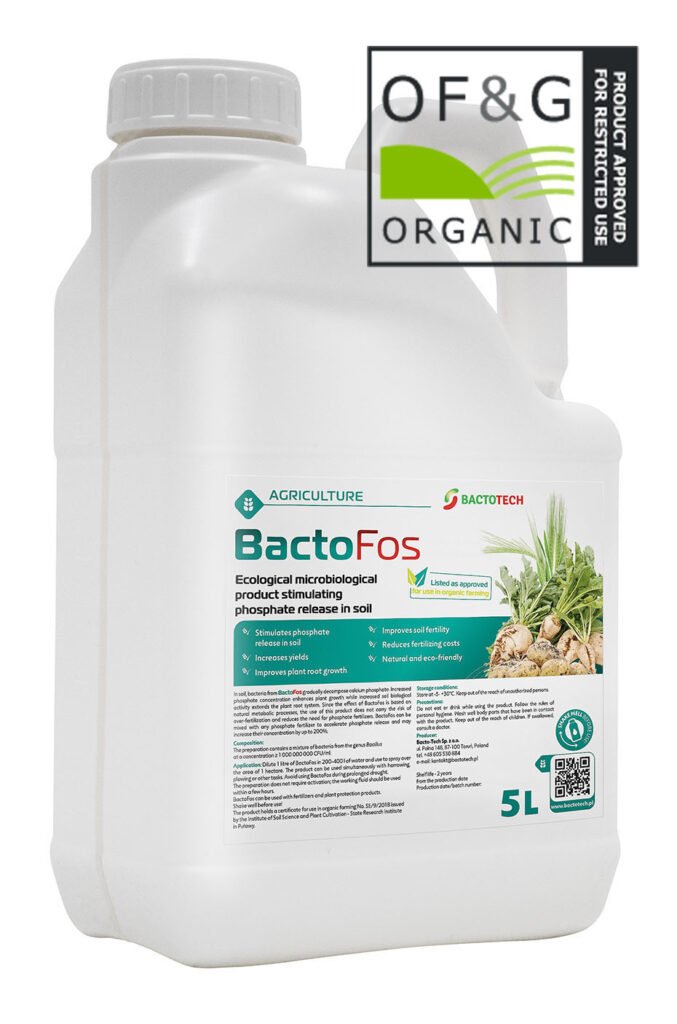
- BactoFos fits fields where phosphorus is present, but crop response still looks weak.
- BactoRol Nitrogen fits the nitrogen-efficiency question when too much N feels leaky, costly, or underused.
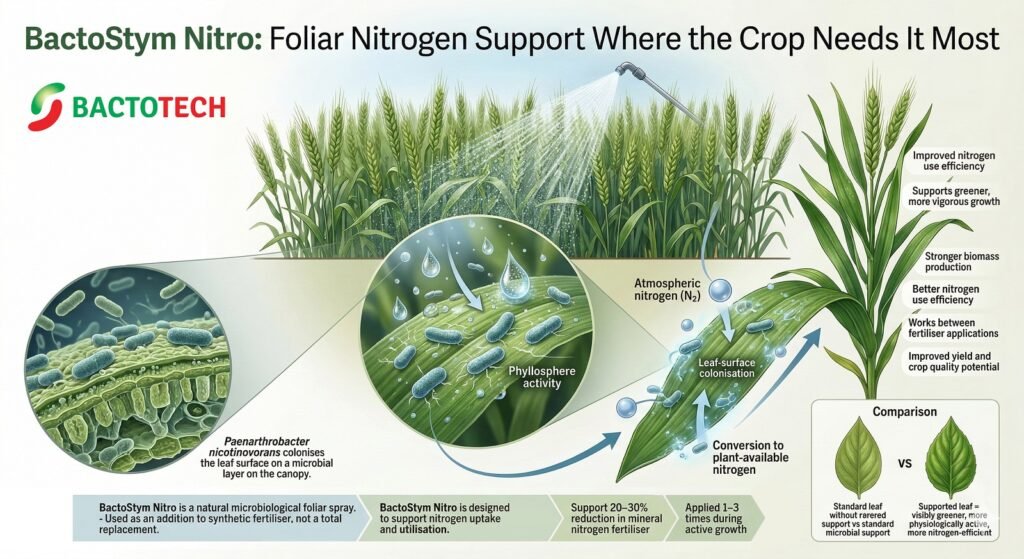
- BactoStym Nitro fits the moment when nitrogen is on, but the crop still looks flat under stress.
- BactoRol Plus fits residue-heavy systems where nutrients stay tied up for too long.
That is the key point. Start with the field problem, then test the right biological tool against it.
A few proof points that make trialling worth it
The numbers matter because they turn biology from an idea into something growers can actually test.
- With BactoFos, research reported an increase of up to 4.42 mg P₂O₅ per 100 g of soil, which converts to roughly 132 kg extra P/ha in the plough layer.
- With BactoRol Nitrogen, the product can support 30–50 kg N/ha through biological activity. In the maize trial, it also lifted cob fresh mass by 41%, cob dry mass by 34%, and grains per cob by 3.8 times compared with the control.
- With BactoStym Nitro, laboratory testing showed a much stronger ammonium nitrogen rise than the market-leading foliar benchmark, which is exactly why we think the product deserves proper on-farm validation (and we’re just awaiting the data from the independent field trial). Over the three-week test period, BactoStym Nitro showed a strong increase in ammonium nitrogen, rising from 1.5 to 60.9 mg/dm³, while the comparison product stayed low overall.
- In the Minikowo 2025 wheat comparison, top-dressed nitrogen fell from 131 to 65.5 kg N/ha, season total nitrogen fell from 148 to 82.5 kg N/ha, and the reduced-N strip still matched the standard wheat programme, with an estimated fertiliser saving of about £71–£73/ha. We covered this wheat comparison in more detail here. That still does not prove that every farm should cut N by the same amount. It does show why a 2026 trial could be worth the effort. When input markets remain volatile, even one well-designed strip trial can answer a very valuable margin question.
That does not mean every farm will get the same result. However, it does show why this season looks like a sensible time to run clear, measured biological trials.
Trial first. Then decide.
That is the most important point in this article.
Farmers do not need to “believe in biology” first. They need to trial biological tools properly and let the farm answer the question. That means simple strips, clean comparisons, clear notes, and measured results. The best trial does not start with, “Can I replace all my fertiliser?” It starts with better questions:
- can I unlock more phosphorus that is already in the soil?
- can I improve nitrogen response from the same spend?
- can I reduce the need for extra top-ups?
- can I build a system that depends less on volatile external inputs?
In a season like this, those are not niche questions. They are core margin questions.
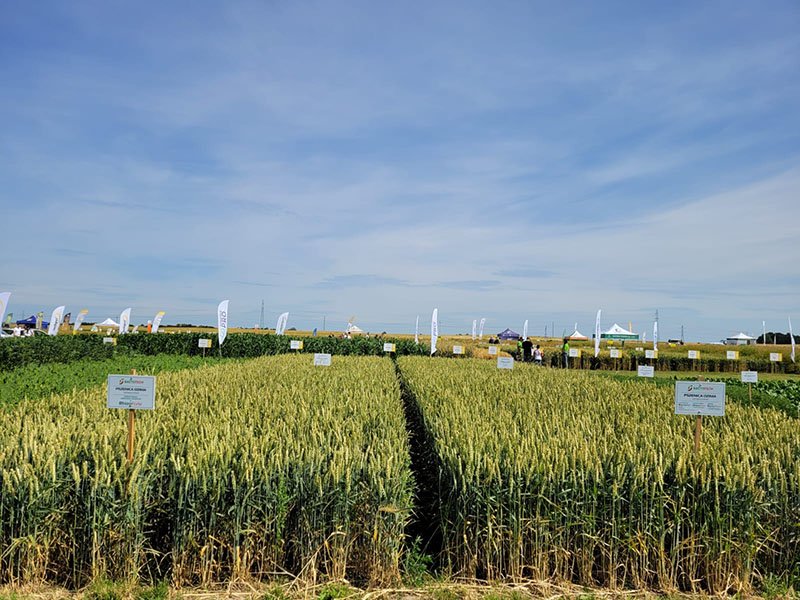
How to Trial Biological Tools Properly on Farm in 2026
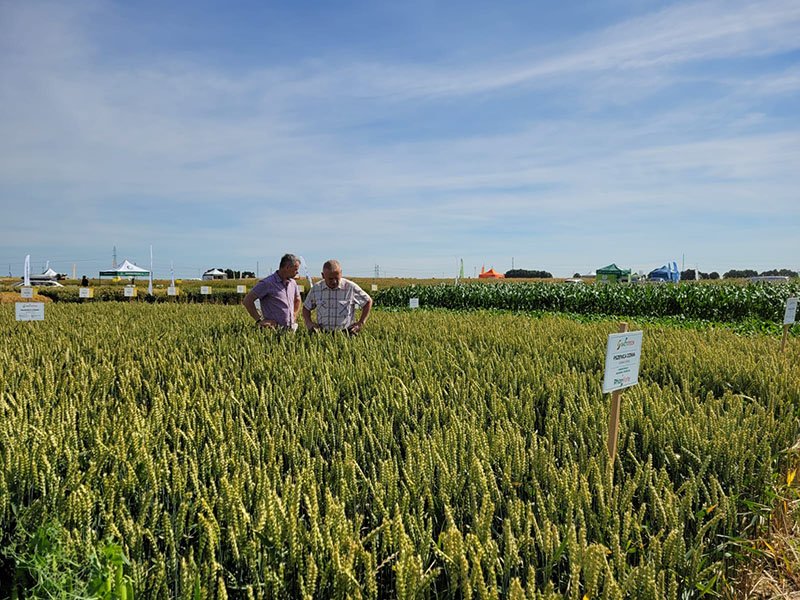
Keep it simple. Start with one clear question, not five. Then run one treated strip against one untreated strip. Keep the rest of the programme the same, so the result is easier to trust.
That means:
- same variety
- same field
- same nutrition plan apart from the treatment
- same timing where possible
- same weather and field conditions as far as possible
The goal is not to prove everything at once. The goal is to answer one practical farm question clearly. It also helps to measure more than yield alone. Look at crop uniformity, rooting, visible stress response, canopy pace, and final harvest result. In some cases, the most useful early sign is not the combine. It is how the crop holds together during the season.
Most importantly, write down what changed. Take photos. Keep short notes. Mark the strips clearly. Then compare the result honestly. The best biological trial is usually not the most complicated one. It is the cleanest one.
Can Farmers Afford Not to Trial Biological Tools This Season FAQs:
Why should farmers trial biological tools this season?
Because input volatility has made nutrient efficiency more valuable. A simple trial can show whether a biological tool helps nitrogen or phosphorus work harder under your own field conditions.
Do biological tools replace synthetic fertiliser?
Not automatically. The best way to use them is as support tools that may improve nutrient access, crop response, or nutrient use efficiency within a wider farm programme.
What is the best way to trial a biological product on farm?
Keep it simple. Run one treated strip against one untreated strip, keep the rest of the programme the same, and measure the result honestly.
What should I measure in a biological trial?
Do not look at yield alone. Also check crop uniformity, rooting, visible stress response, canopy pace, and final harvest result.
Which farm problems are most worth trialling first?
The best place to start is with a clear problem. For example: locked phosphorus, weak nitrogen response, residue tie-up, or a crop that stays flat after stress.
How do I know if a biological tool is worth scaling up?
If the strip shows a clear, repeatable benefit under your own conditions, then you have a reason to scale. If not, you still gain something useful, because the farm learns what does and does not pay.
The Smart Question for 2026 Is Not “Why Biology?” but “Why Not Test It Properly?”
This is really the point of the whole article. Farmers do not need to gamble the whole nutrition programme, and they do not need to make dramatic changes overnight. However, they do need to ask a sensible question: if nitrogen and phosphorus stay volatile, what can we test this season that may improve nutrient efficiency and reduce exposure to that risk?
That is why biological tools deserve serious attention now. Not because they promise miracles, and not because they replace conventional fertiliser overnight. Instead, they deserve proper on-farm trials because they may help unlock more phosphorus already in the soil, improve nitrogen response, and make better use of the nutrients already in the system.
What the industry should do next
The smartest response now is not to argue endlessly about whether biology is perfect. The smarter response is to put it into the ground, into the programme and into a fair on-farm comparison. Run the strip trial. Measure the result. Compare the margin. Then decide what deserves a bigger place in the nutrient strategy. The evidence we have already seen is not a reason to overclaim. It is a reason to test properly. That means simple strips, fair comparisons, clear notes, and honest measurement.
So, the real risk this season may not be trialling biology. The real risk may be not testing it at all.
Related guides
- If you want the wider nitrogen-efficiency plan, read our guide to reduce nitrogen fertiliser use. It explains where biological tools fit, what to measure, and how to cut waste without guessing.
- If your main problem is weak crop response after nitrogen timing, read crop not responding to nitrogen. It shows what to check first before adding more N.
- If you want the proof and mechanism behind foliar nitrogen support, read our guide to foliar nitrogen fixing spray. It explains how BactoStym Nitro works, what the lab results showed, and what the field-trial update means.
- If this season is forcing you to rethink nitrogen and phosphorus strategy, do not wait for perfect certainty. Run a proper trial. Test BactoFos where phosphorus is present but crop response stays weak; BactoRol Nitrogen where nitrogen feels expensive and inconsistent, test BactoStym Nitro where crop response drops in stress periods and BactoRol Plus where residues keep tying nutrients up after harvest.