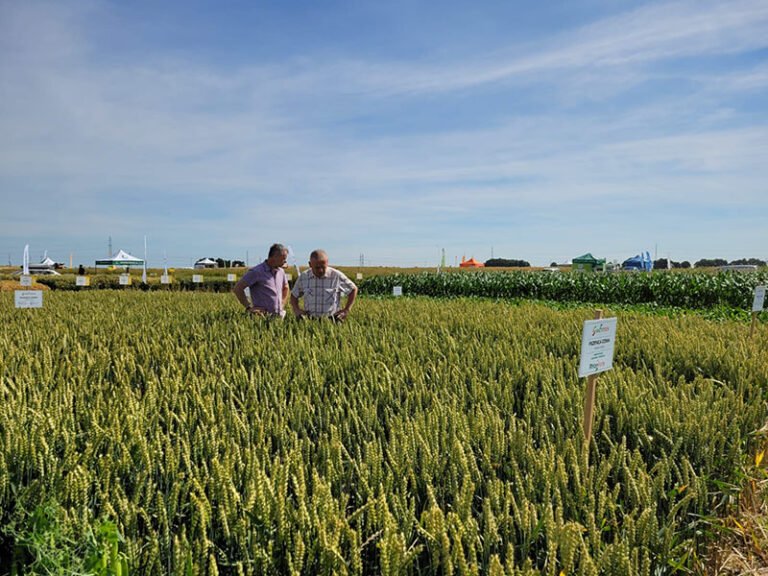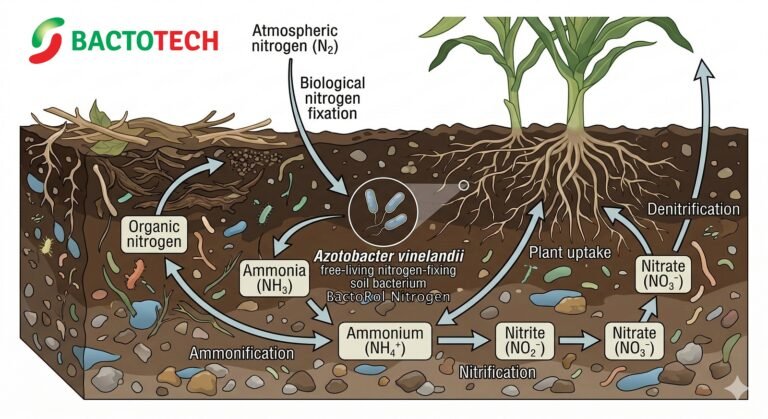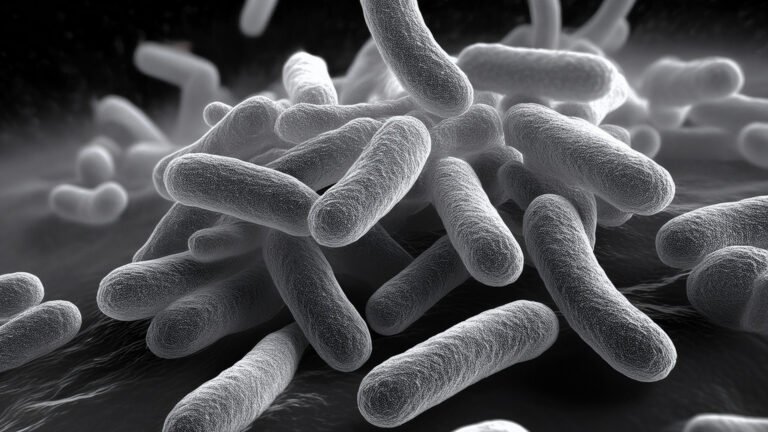
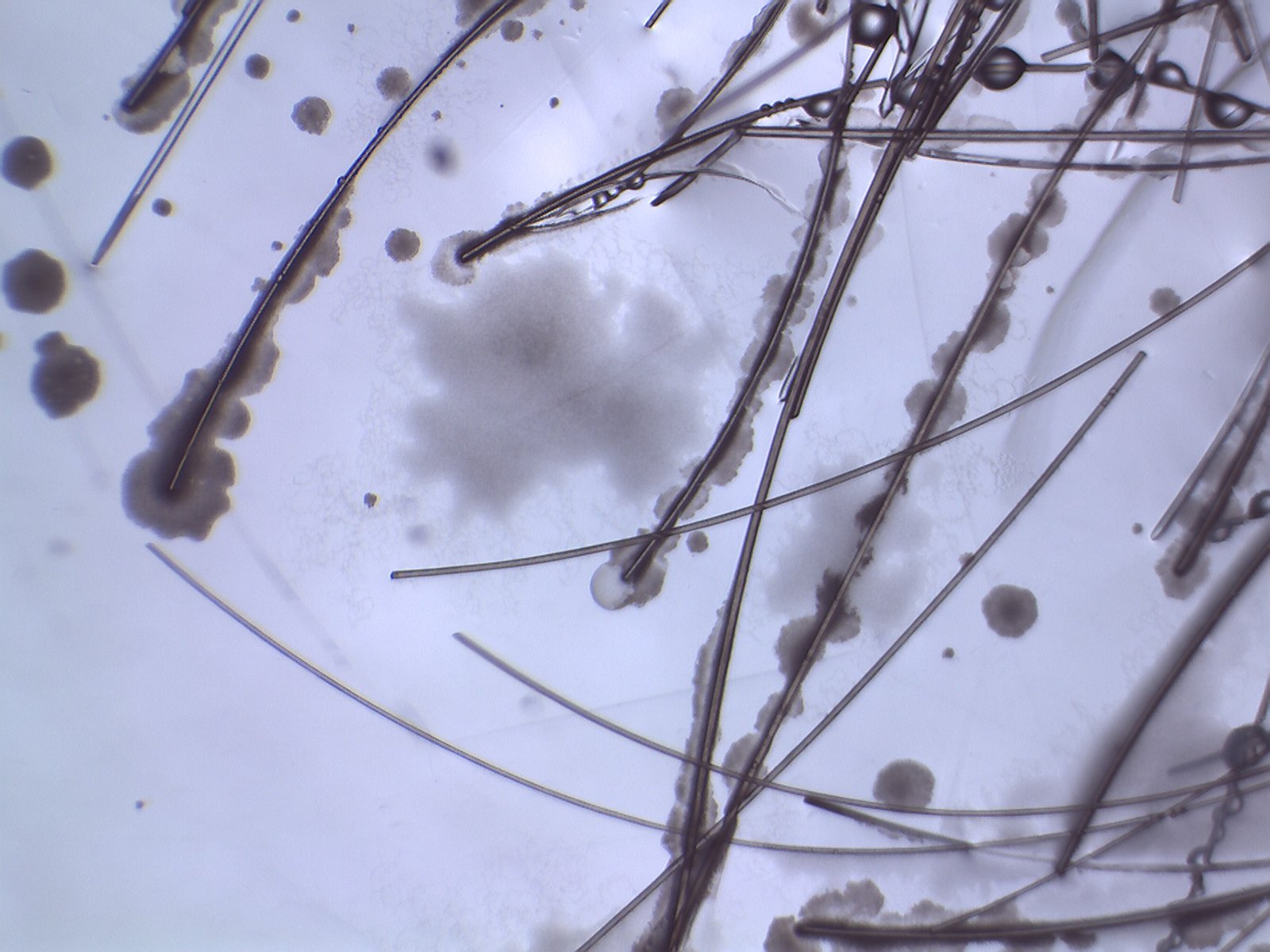
Sorghum biofertiliser field trial: In the Gezira region of Sudan, we tested RhizoForte (seed treatment) and BactoRol (soil application). Despite limited irrigation, both products lifted crop performance and energised soil life.
- Plant height increased, so stands looked stronger and more even.
- Kernel height improved, which suggests better grain fill.
- Additionally, leaf area expanded, and therefore canopies captured more light.
- Rhizosphere microbial counts rose, so root zones stayed more active.
Overall, RhizoForte and BactoRol worked together to support growth even under water stress.
Key findings at a glance
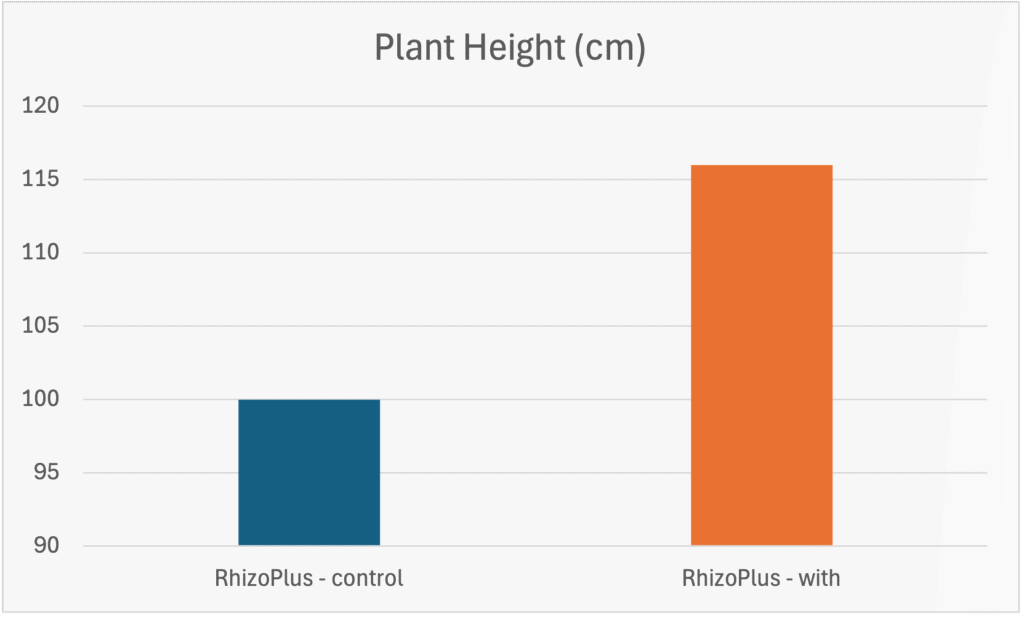
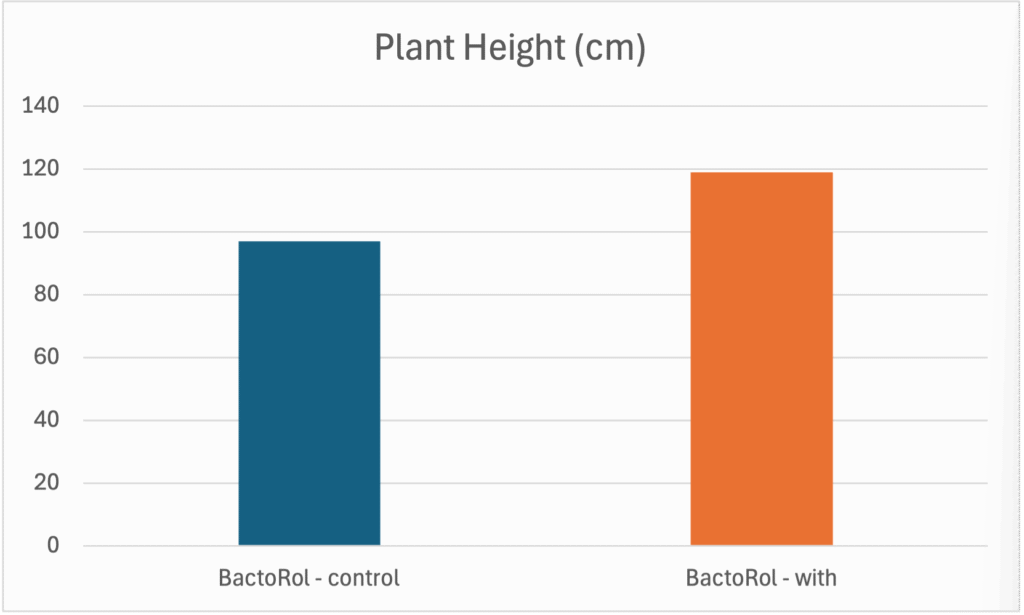
Taller plants. With BactoRol, height reached ~114–119 cm, whereas controls stood at 86–97 cm. With RhizoForte, plants measured ~100–116 cm compared with 83–100 cm in controls.
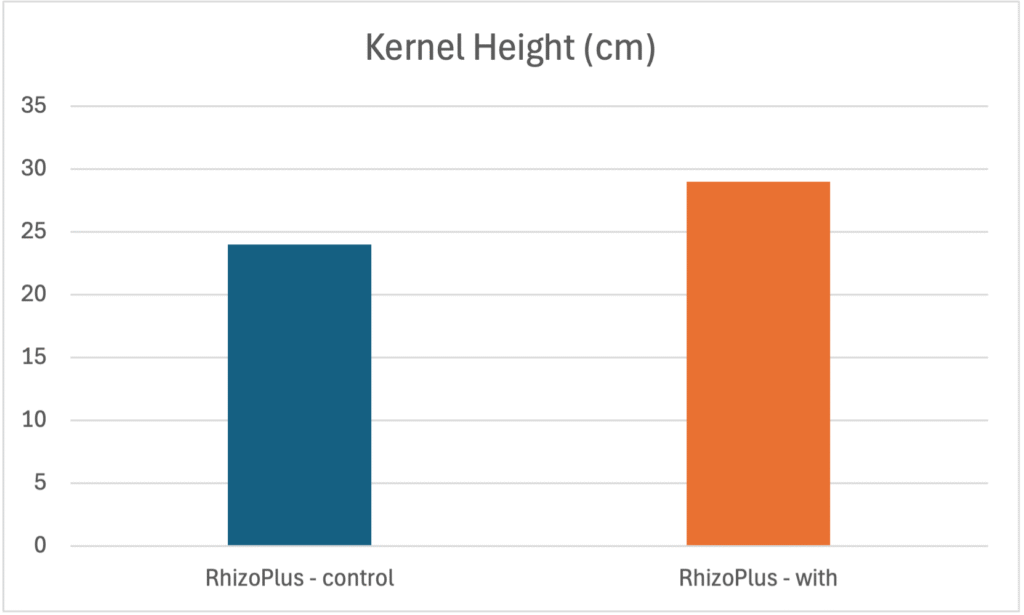
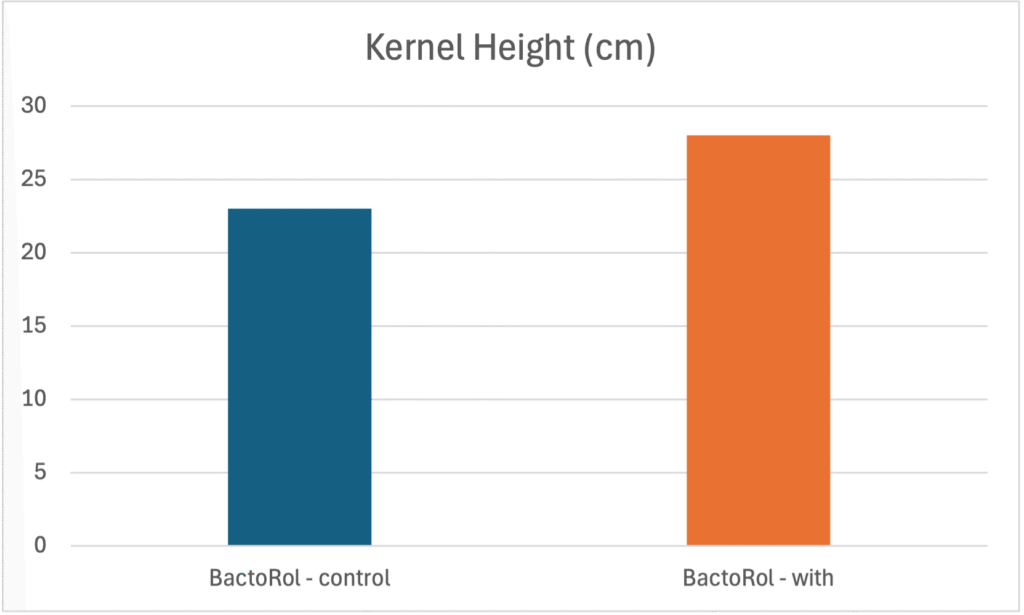
Stronger heads. Kernel height rose to ~26–28 cm with BactoRol versus 17–23 cm in controls. RhizoForte reached ~27–29 cm, while controls were 18–24 cm.
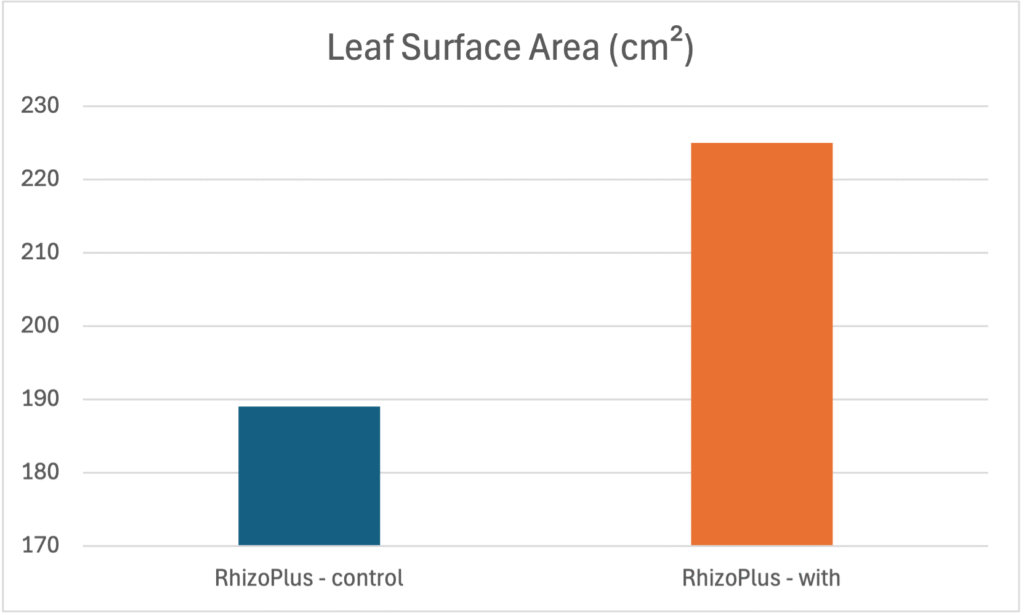
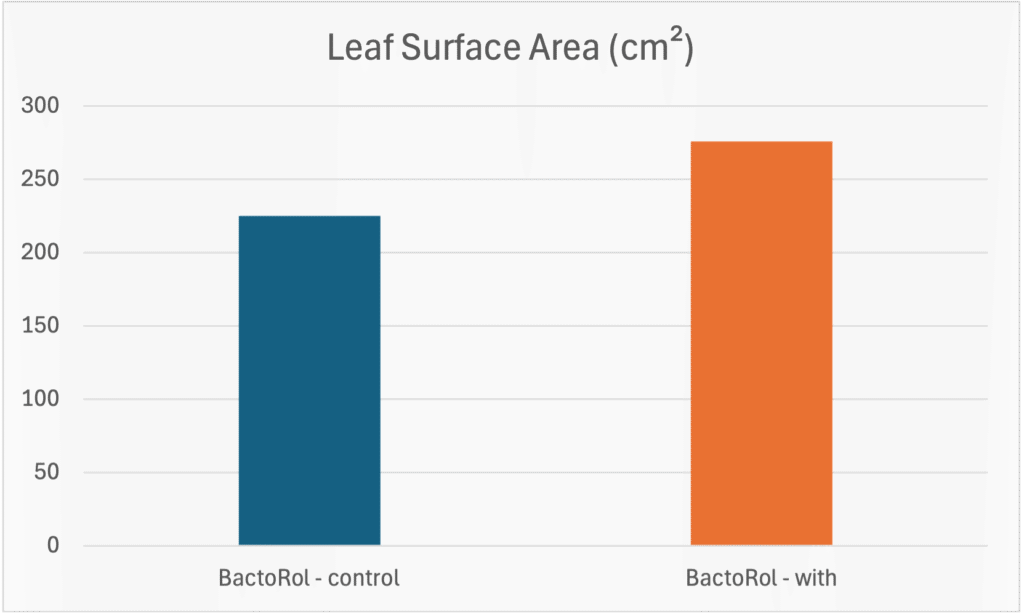
Bigger canopies. Leaf area climbed as high as 276 cm² with BactoRol compared with 131–225 cm² in controls. RhizoForte reached 189–225 cm², whereas controls were 157–189 cm².
More active rhizosphere. Bacterial CFU increased by about tenfold in treated soils: BactoRol 8.9×10⁶–1.3×10⁷ and RhizoForte 2.1×10⁶–2.9×10⁶, while controls measured ~2.2×10⁵–5.1×10⁵ and 3.2×10⁵–4.5×10⁵, respectively.
Overall, both products lifted plant growth and soil activity, even under limited irrigation.
Why this matters
Under limited irrigation, Sorghum crops need every edge to keep growing and fill grain. Taken together, these results show that targeted microbial inputs can lift early vigour, build canopy faster, and support key yield parts. At the same time, they enrich the soil microbiome, so nutrient cycling stays active and fields gain resilience. In short, biology helps plants hold performance when water is tight.
Methods (in brief)
Two separate field experiments on sorghum (cv. Butana V.) were established in Gezira:
- RhizoForte applied as a seed treatment; 2) BactoRol applied to soil before sowing. Measurements covered plant height, kernel height, leaf surface area and rhizosphere CFU under limited irrigation.
Results (data summary)
- Plant height (cm):
• RhizoForte: 100-116 vs control 83-100
• BactoRol: 114-119 vs control 86-97. - Kernel height (cm):
• RhizoForte: 27-29 vs control 18-24
• BactoRol: 26-28 vs control 17-23. - Leaf area (cm²):
• RhizoForte: 189-225 vs control 157-189
• BactoRol: 171-276 vs control 131-225. - Rhizosphere CFU (per g soil):
• RhizoForte: 2.1×10⁶-2.9×10⁶ vs control 3.2×10⁵-4.5×10⁵
• BactoRol: 8.9×10⁶-1.3×10⁷ vs control 2.2×10⁵-5.1×10⁵.
| Treatment | Plant Height (cm) | Kernel Height (cm) | Leaf Surface Area (cm²) |
| RhizoForte – with | 100-116 | 27-29 | 189-225 |
| RhizoForte – control | 83-100 | 18-24 | 157-189 |
| BactoRol – with | 114-119 | 26-28 | 171-276 |
| BactoRol – control | 86-97 | 17-23 | 131-225 |
Interpreting the gains
- Together, larger canopies and taller heads suggest better light capture and stronger yield formation under water-limited conditions.
- Meanwhile, the ≈10× CFU rise shows beneficial bacteria established and active in the root zone. As a result, nutrient supply improves and plants tolerate stress more effectively.
| Treatment | Rhizosphere CFU (per g soil) |
| RhizoForte – with | 2.1×10⁶ – 2.9×10⁶ |
| RhizoForte – control | 3.2×10⁵ – 4.5×10⁵ |
| BactoRol – with | 8.9×10⁶ – 1.3×10⁷ |
| BactoRol – control | 2.2×10⁵ – 5.1×10⁵ |
Sorghum biofertiliser field trial – practical takeaways:
- For dry-prone blocks, use a seed treatment (RhizoForte) to lift early stand vigour. In addition, apply BactoRol to the soil to boost root-zone activity and help the canopy expand.
- Alongside this, keep good agronomy in place – timely sowing, balanced NPK (RB209), and sensible irrigation scheduling. Together, these steps create a cumulative effect that supports growth when water is tight.
Want a simple, farm-ready programme for your sorghum or cereals? Get in touch for more info.