Soil inoculants for faster straw breakdown: why this matters
Soil inoculants for faster straw breakdown matter more when fields carry heavy straw after harvest. That straw can slow drilling, make seedbeds messier, and add pressure at the start of the next crop. As a result, many growers look for ways to speed up residue breakdown and reduce early crop stress.
Quick Answer
Soil inoculants for faster straw breakdown are biological products that support the microbes and enzymes that help break crop residues down. As a result, they may help reduce straw pressure, improve seedbed condition, and ease some of the early nitrogen drag that can follow heavy straw returns. However, they work best when straw is spread evenly, some moisture is present, and the rest of the system is working well. Therefore, biology should be used as part of a practical residue plan, not as a stand-alone fix.
- Why farmers ask for proof. However, farmers do not want big claims on their own. They want proof. They want to know what the trial work shows, what happens in real field conditions, and what signs to look for in their own crops. That is why this guide focuses on both practical use and evidence.
- What this guide will cover. This page explains how soil inoculants for faster straw breakdown fit into residue management. It also looks at where they may help most, what trial evidence says, and how to judge results in the field. In addition, it covers the wider picture, because biology works best when straw is spread well, moisture is present, and drilling conditions are right.
- More than theory. Most importantly, this is not just a theory page. It is built around the real questions growers ask in the yard and in the field. What is the evidence? When does it work best? What should you measure? And how do you tell whether the product is really helping?
Key Facts
Main issue: Heavy straw can slow drilling, tie up nitrogen, and make establishment less even.
What soil inoculants do: They help microbes break straw and other residues down faster.
They may improve: Cleaner seedbeds, less residue pressure, and better early crop conditions.
What they do not replace: Good straw spread, moisture, correct timing, and solid drill setup.
Why proof matters: Farmers want evidence, not hype. So, this guide looks at both trial results and field signs.
What to check: Residue cover, slug pressure, emergence, crop evenness, and passes before drilling.
Where biology fits: It works best as part of a practical residue plan, not on its own.
Before judging any soil inoculant, check whether straw is truly the main issue. In many fields, slow residue breakdown sits alongside poor seed contact, slugs, compaction, or shallow roots. Therefore, the best proof comes from comparing good and poor areas in the same field. That way, you can see whether the crop problem really follows straw load and residue pressure.
Cleaner seedbeds and faster residue cycling are not only agronomy wins. They are also cost-saving wins. For the bigger picture on how residue breakdown fits into lower diesel use, fewer passes, and better nutrient efficiency, read our guide on REDUCE FARM INPUT COSTS.
Diagnosis table: is straw really the problem?
| What you see | What it may mean | What to check in the field | Why this matters |
|---|---|---|---|
| Thick straw still sitting on the surface weeks after harvest | Residue breakdown is slow | Check straw cover, straw height, moisture, and soil contact | Slow breakdown often means the system is not moving yet |
| Pale crop in high-residue areas | Early nitrogen may be tied up during straw breakdown | Compare crop colour in heavy-straw and clean areas | This helps show whether the problem follows residue load |
| Uneven emergence where trash is thickest | Straw may be affecting seedbed quality, not just nitrogen | Dig the seed row and check slot closure, depth, and contact | Poor establishment can look like a nutrition issue |
| More slug activity under straw mats | Heavy residue is creating shelter | Use slug traps and inspect under residue | Missing plants may be slug loss, not mainly N tie-up |
| Stronger crop where straw is lighter | Residue pressure may be driving the difference | Compare plant size, colour, and numbers across zones | Side-by-side field comparison gives stronger proof than guesswork |
| Crop stays slow after drilling into trashy ground | Straw pressure may be mixed with compaction or shallow roots | Dig roots in both poor and good patches | Root restriction can make straw-related problems look worse |
| Residue breaks down faster in damp areas | Moisture is helping microbes work | Compare dry and moist parts of the field | Biology works better when conditions support it |
| Little visual change after application | Conditions may have limited the result | Check spray timing, residue contact, and moisture after use | This helps judge whether the product had a fair chance to work |
The science supports the idea behind soil inoculants for faster straw breakdown.
- Research on nitrogen immobilisation and crop residues shows that high-carbon straw can temporarily tie up available nitrogen while microbes break it down.
- In addition, work on the residue microbiome explains that microbes use enzymes to break tough plant fibres such as cellulose, hemicellulose, and lignin down.
- However, studies on straw decomposition also show that results depend on field conditions such as moisture, residue load, soil contact, temperature, and nitrogen balance.
That is why good post-harvest residue management still matters, especially where straw is left on the surface and breaks down more slowly because it has less contact with the soil. Therefore, the best proof is not a claim on its own, but clear field signs such as faster residue loss, cleaner seedbeds, better emergence, and fewer passes before drilling.
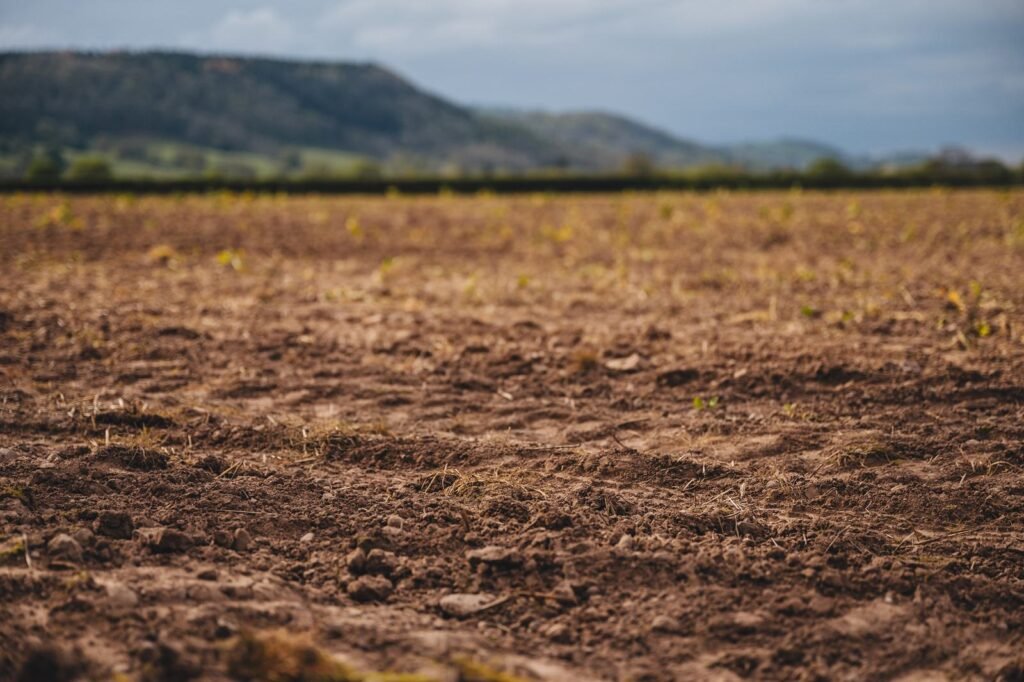
Our research: how Bacillus inoculants switched soil biology on faster
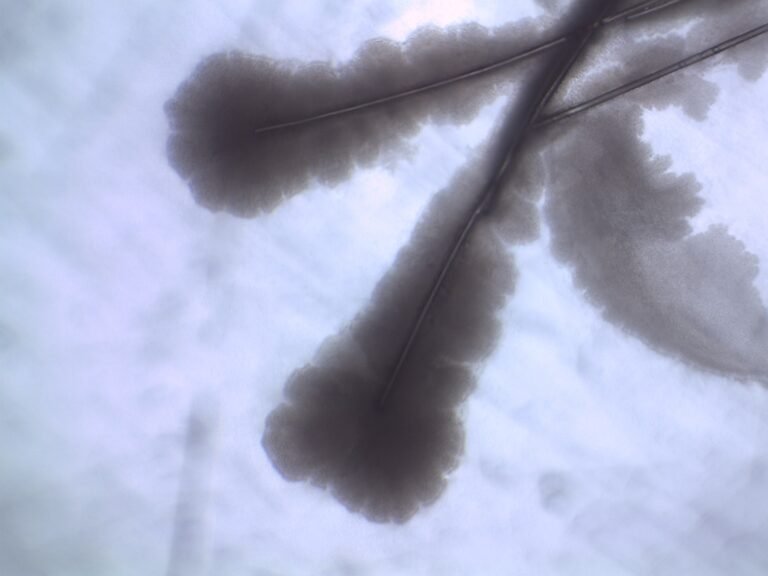
At the start of this work, we wanted to test a simple question: can Bacillus-based soil inoculants wake soil biology up faster and help straw start breaking down sooner? To test this, wheat straw was mixed into soil and treated with either a multi-strain Bacillus blend (B-MIX) or a single-strain product. Then we tracked early biological activity over the following days.
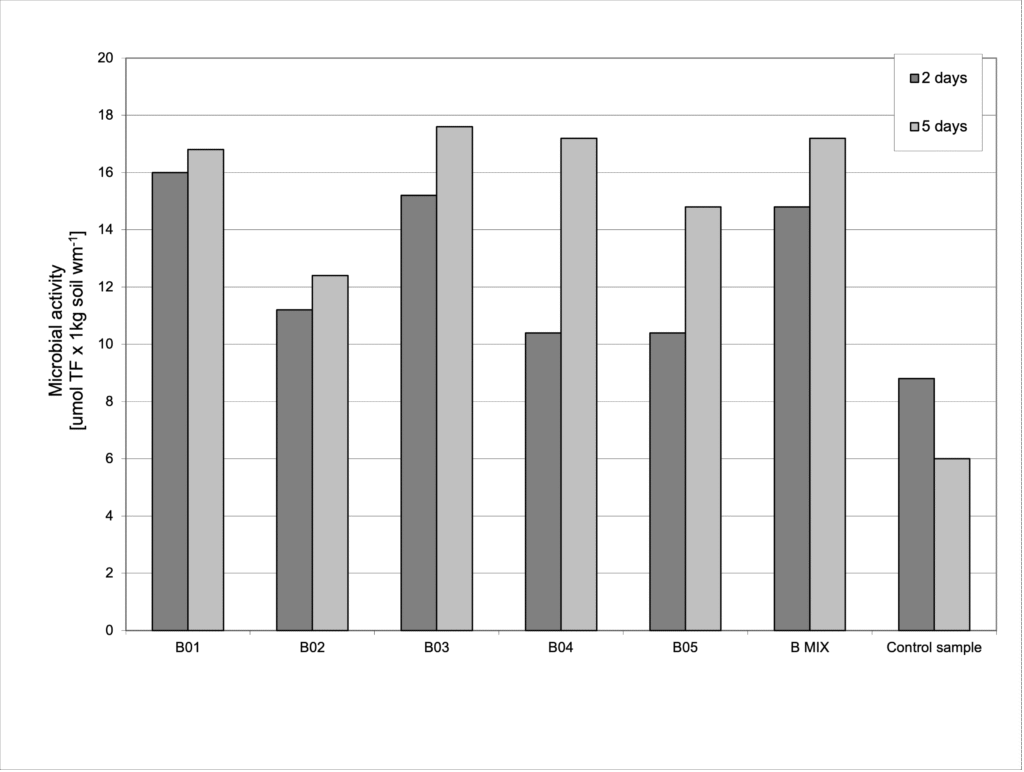
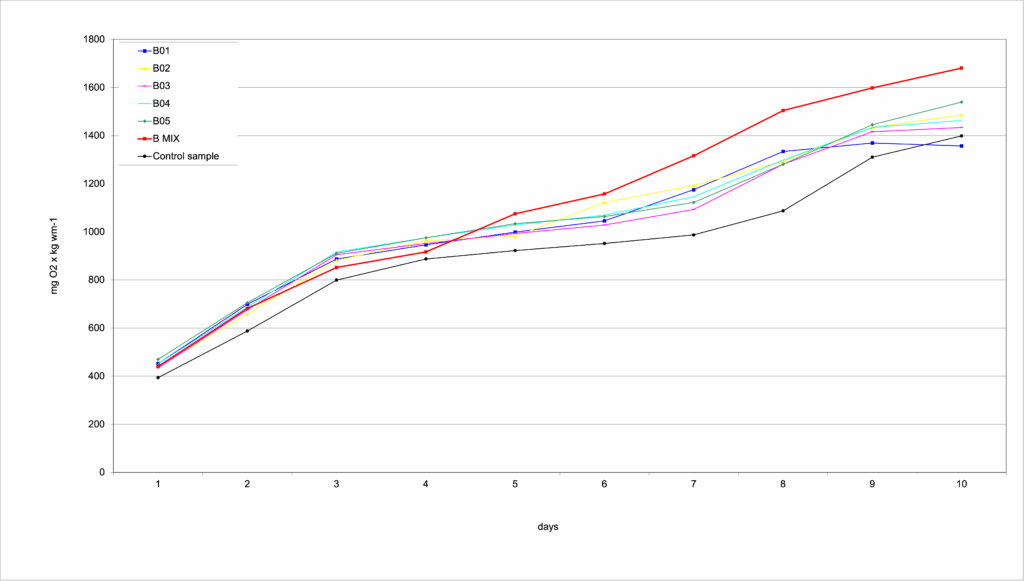
What we saw was a fast response. Within 2–5 days, dehydrogenase activity increased, which suggests that microbial activity had switched on. At the same time, soil respiration also rose. The strongest rise appeared between days 5 and 9 in the multi-strain B-MIX treatment.
In practical terms, this points to a faster biological start in straw-amended soil. That matters because quicker microbial activity is linked to earlier residue breakdown, steadier nutrient cycling, and cleaner seedbed conditions. In this trial, both Bacillus treatments helped activate the soil biology, but the multi-strain blend gave the earlier and stronger response.
How we set it up and what we measured
- Setting: Wheat straw was mixed into soil and treated with selected Bacillus strains, including a multi-strain mix.
- Monitoring: Then, we tracked early dehydrogenase activity and soil respiration (oxygen use) to catch the first wave of microbial response.
- Focus: Finally, we compared inoculated soils with the control to see how quickly and how strongly microbes switched on, and whether residue breakdown started sooner.
Results
Early metabolic “lift”
- Dehydrogenase activity increased within 2–5 days post-inoculation, indicating faster energy turnover in soil. This is a strong early proxy for microbial activity and potential decomposition rate.
Stronger respiration pulse
- Respirometric activity (oxygen consumption) was noticeably higher in inoculated soils than in the untreated control. The effect peaked around days 5–9, with the multi-strain (B-MIX) treatment performing best.
Practical effect on residues
- Faster microbial activation aligns with quicker straw decomposition, helping reduce nitrogen tie-up, clear seedbeds sooner, and support smoother establishment.
Quick-reference table
| What we measured | What changed with soil inoculants | When it showed up | Practical takeaway |
| Dehydrogenase activity | Increased vs control | ~Days 2–5 | Soil biology “switches on” earlier. |
| Respiration (O₂ use) | Increased vs control; B-MIX strongest | ~Days 5–9 | Faster decomposition kick-off. |
| Straw decomposition | Faster breakdown (qualitative) | Early stage and onward | Cleaner seedbeds; less N tie-up. |
What this means in practice
If residue levels are high, earlier microbial activity may help the system get moving sooner. That can support faster straw breakdown, reduce early nitrogen drag, and improve seedbed conditions before drilling.
It also suggests that multi-strain Bacillus blends may give a stronger early push than a single strain in this kind of setup. That does not mean field results will always be identical. However, it does give a useful reason for using biology where residue pressure is clearly slowing the system down.
Limits of this trial
This was an early controlled study in straw-amended soil. Therefore, field results can still vary with soil type, moisture, temperature, straw load, and the biology already present in the field.
That is why this evidence should be read as a strong early indicator, not as a guarantee that every field will respond in exactly the same way. The next step is to keep testing across more soils, seasons, and field conditions.
When soil inoculants help most
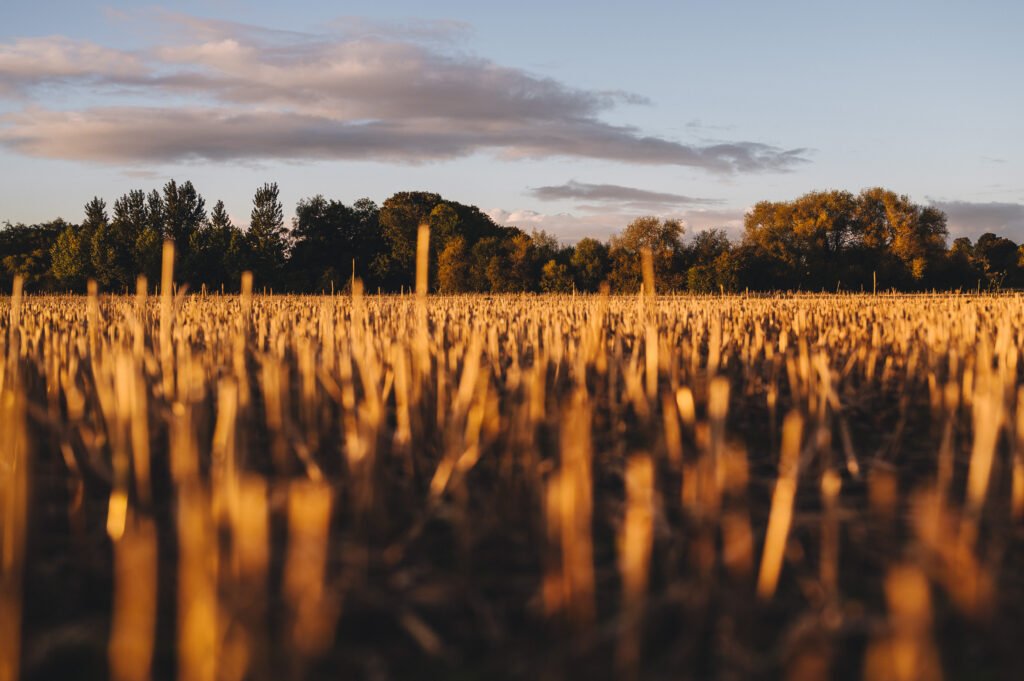
Soil inoculants help most when heavy residue is slowing breakdown, making seedbeds messy, or adding early nitrogen drag. They work best where straw is spread evenly and some moisture is present. However, they support a good system rather than rescue a bad one. In other words, biology helps most when the basics are already in place.
When soil inoculants are not enough on their own
Soil inoculants are not a fix for badly spread straw, dry conditions, hair-pinning, or compaction. They help the system, but they do not replace good harvest and drilling practice. In other words, biology works best when the main field problems are already under control.
Simple programme (post-harvest → cover termination → pre-drill)
Apply soon after harvest, target the residue, and time the pass near moisture if possible. Re-apply around cover termination where residue loads stay high. Then check straw cover, seedbed quality, and drilling conditions before the next crop. Biology works best when the residue plan is simple, timely, and well set up.
Measure it: turn “it looks better” into proof
If you want to know whether the programme is working, measure the field rather than trust appearance alone. A cleaner surface may look encouraging. However, the real question is whether residue pressure is falling and seedbed conditions are improving.
- Start with residue cover or straw height at fixed points. Then compare the same spots over time. If residue is clearing faster, that is one useful sign.
- Next, look at slug pressure in heavy-trash areas. Use simple traps, because fewer sheltered spots can mean less risk around drilling.
- It also helps to track emergence and crop evenness after drilling. If seedbeds are cleaner and seed-to-soil contact improves, establishment should usually look more even.
- Finally, count the number of passes needed before drilling. If the field is easier to manage, that matters just as much as what you see on the surface. Fewer passes can mean lower cost, less time, and a smoother start for the crop.
| What to measure | Why it matters |
|---|
| Residue cover (%) or straw height | Shows whether straw is breaking down faster |
| Slug traps | Shows whether heavy residue is giving slugs less shelter |
| Seedbed condition | Helps show whether the surface is becoming easier to manage |
| Emergence counts at day 7–14 | Shows whether establishment is becoming more even |
| Crop evenness across the field | Helps compare heavy-straw and lighter areas |
| Passes per hectare | Shows whether residue pressure is falling in practical terms |
| Diesel per hectare | Helps measure the cost of managing the seedbed |
FAQs about soil inoculants for faster straw breakdown
What are soil inoculants for faster straw breakdown?
Soil inoculants for faster straw breakdown are biological products that help useful microbes get to work on crop residues. In simple terms, they support the natural process of breaking straw and trash down.
How do soil inoculants help break straw down faster?
They support microbial activity in the soil. Those microbes release enzymes that help break tough plant fibres down. As a result, straw can start cycling sooner and the seedbed may become easier to manage.
Do soil inoculants replace good straw spreading?
No. Good straw spread still matters a lot. If residue is left in thick patches, biology alone will not fix that. Therefore, inoculants work best when the basics are already right.
Can soil inoculants reduce straw tying up nitrogen?
They may help reduce early nitrogen drag by moving residue breakdown on sooner. However, the result depends on residue load, moisture, soil contact, and overall field conditions.
Do soil inoculants work in dry conditions?
They usually work better when some moisture is present. In very dry conditions, microbes are slower to get going, so straw often breaks down more slowly.
Are soil inoculants useful after cereal crops?
Yes, that is often where they fit best. Heavy cereal residues can slow drilling, keep seedbeds trashy, and add early nitrogen pressure. As a result, biological support can be more useful after high-straw crops.
Can soil inoculants help with cover-crop residues too?
Yes. They can also support the breakdown of cover-crop trash, especially where a lot of plant material needs to cycle before drilling the next crop.
Do soil inoculants help with slugs?
Not directly in the same way as slug control products. However, if residue breaks down faster and there is less surface shelter, slug pressure may become easier to manage.
When should I apply a soil inoculant for faster straw breakdown?
Usually soon after harvest, while residue is still fresh and easier to target. They can also be useful around cover-crop termination where residue loads stay high.
What should I measure after application?
Check residue cover, straw height, slug pressure, emergence, crop evenness, and the number of passes needed before drilling. That gives a better answer than judging the result by eye alone.
Do trial results matter with soil inoculants?
Yes, very much. Farmers want proof, not just claims. That is why it helps to look for evidence of stronger microbial activity, faster residue change, cleaner seedbeds, and better early crop conditions.
Are multi-strain Bacillus inoculants better than single-strain products?
They may give a stronger early response in some situations. In your own research, the multi-strain Bacillus blend gave a quicker and stronger early lift in microbial activity than the single-strain treatment. However, field results can still vary with soil type, moisture, and residue load.
Can soil inoculants fix every residue problem on their own?
No. They are a support tool, not a magic fix. They work best alongside even straw spread, some moisture, good drill setup, and sound soil structure.
Related guides
If soil inoculants for faster straw breakdown are part of your residue plan, it also helps to read our guide on straw tying up nitrogen, which explains why heavy residues can create early nitrogen drag while microbes break them down. If the bigger issue is uneven crop start, our patchy emergence in crops article shows how trashy seedbeds, poor contact, and uneven drilling conditions can slow the crop down.
Take a look at our soil compaction in fields guide, because compaction often sits underneath residue problems and makes establishment harder to diagnose. For the wider biology angle, our soil microbes for farming piece helps explain how different microbial groups support residue cycling, nutrient movement, and soil function.
The products behind this programme
- BactoRol Plus fits this programme where the main issue is slow residue breakdown, trashy seedbeds, and early nitrogen drag linked to heavy straw or cover-crop residues. In practical terms, it is the product to position around faster residue cycling and cleaner conditions before drilling.
- BactoSoil Balance fits where the wider problem is weak soil biology, poor aggregation, or uneven residue turnover across the field. Therefore, it works well as the supporting product where residue pressure is mixed with broader soil-structure or soil-life issues.
The message stays simple: first reduce residue pressure, then support the wider soil system so the next crop has a better start.
Dealing with heavy straw, slow residue breakdown, or messy seedbeds before drilling?
Tell us what crop you are following, how much residue is left, and what the field looks like now. We can help you work out whether soil inoculants for faster straw breakdown are likely to help, and how to build a simple biological programme around your residue plan.
This guide is for general information only. Always follow product labels, safety data, and farm-specific agronomic advice. Results can vary with soil type, moisture, temperature, residue load, and field conditions. Therefore, the best approach is to combine biological support with good residue management, sound drilling practice, and simple field measurements.